
Catch a Snowflake and Keep It Forever
Snowflakes are among nature’s most beautiful and short-lived creations. Yet there is a way to preserve these fragile wonders to study or admire them anytime you wish. You and a group of your friends can do this project with about $20 worth of supplies available at any art store. (And you’ll need a snowstorm.)
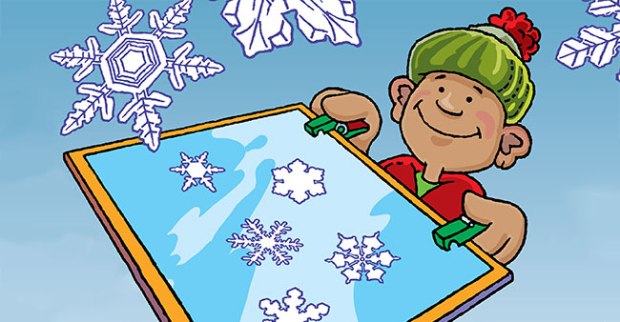
What You’ll Need:
- Two sheets of clear acetate (available in single sheets or in packages) for each person
- “Crystal Clear” acrylic coating (a spray-on plastic artists use to protect illustrations)
- Pieces of cardboard large enough to cover each acetate sheet
- Two clothespins per person
- Enough cardboard boxes or empty coolers to cover all the cardboard sheets
What You’ll Do:
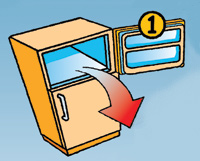 Step 1: Stash the acetate and cardboard sheets in the freezer. Turn the box or cooler upside down outdoors. Place can of acrylic outside to cool.
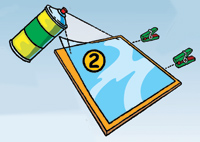 Step 2: Once it starts to snow, take the acetate and cardboard from the freezer and head outside. Duck under a porch or overhang to protect everything from falling snow. With clothespins, fasten a single sheet of acetate to a piece of cardboard. Spray the acetate sheet with a thin coat of acrylic from the air-chilled can. (If you use too much, the snow will melt in the liquid.)
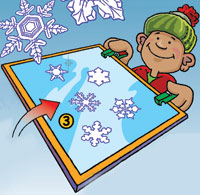 Step 3: Hold up the contraption by the clothespins and step out in the falling snow so that individual flakes collect on the acetate sheet. You’ll want a lot, but not so many that they begin to fall on top of one another.
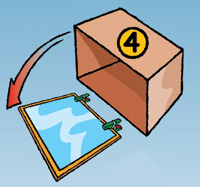 Step 4: Once you have enough, carefully tuck the sheet under the cardboard box or cooler.
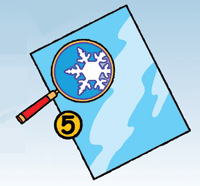 Step 5: After an hour, the snowflakes that stuck to the acetate will have evaporated, leaving behind perfect acrylic replicas. Hold the acetate up to a light and scan the sheet with a magnifying glass or an 8X slide viewer. You may also project the crystalline images onto a screen with an overhead projector.
FROZEN FACTS
- Snowflakes form when water vapor freezes around tiny bits of dust in the air. No dust, no snowflakes.
- Scientists have identified 10 types, including graupel (granular) flakes, as well as sleet and hail. The other seven varieties are the more familiar crystal shapes.
- No two snowflakes are alike? In the mid-1980’s, a scientist found snowflakes that were extremely similar 20,000 feet in the air above Wisconsin.
- Snow crystals are always six-sided, because the atoms in water molecules are arranged in triangles.
- The exact size and shape of a snowflake depend on the temperature, moisture content in the air and how much time it has to grow before hitting the ground—or your acetate sheet.
If only it snowed in Sunny San Diego…
don’t think i can do that down here in Houston 🙂
oh my
with the good weather we’re having in Wisconsin it’ll be snowing in Miami
cool
The weather is weird here. XD It’s 60 degrees now, but will be 12 degrees in a week.
Yeah, so I read this and I thought, well this would be a excellent idea, except for the fact that I live in the hottest state…………..FLORIDA! On the twenty fifth of December, it was 80 degrees outside?!?!??!
cool
it s not snowing
I tried this with high hopes, and it did not work for me. 🙁