
How to Keep Spiders as Pets
Spiders can make fascinating pets. Here are a few steps to get you started keeping spiders.
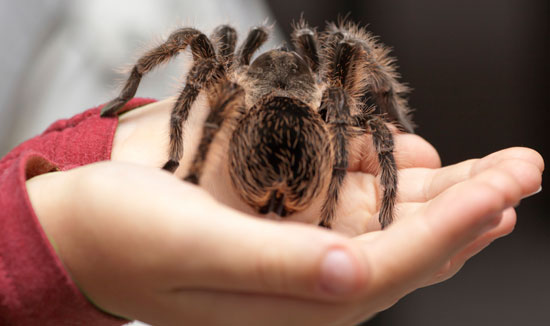
Step 1: Catch a spider
Spiders are all around us, indoors and out, so they’re not hard to find. Some species can bite and a few are venomous. Learn about dangerous spiders in your area before heading out. It’s easy to safely catch a spider by using a small jar. Gently coax it into the jar using the lid. Spiders will eat each other, so keep only one per jar.
Step 2: Prepare a cage
Large spiders do well in the inexpensive plastic terrariums available from pet stores. Smaller ones can be kept in jars or plastic containers if air holes are drilled into the lid or sides. Be sure the holes are small enough to prevent escape.
Potting soil makes good cover for the cage bottom. Sticks, dead leaves or artificial plants provide structure for hiding, climbing and webbing.
Step 3: Water
Depending on the size of the spider, anything from a plastic bottle cap to a small bowl can serve as a water dish. Spiders also drink water sprayed on webbing, but you should never allow the cage to become damp.
Step 4: Feeding
Offer insect prey once or twice a week. Crickets are available from pet shops, or you can collect insects outdoors if no insecticides have been sprayed in the area.
Step 5: Observing
Watch your spider and take notes on its behavior. You won’t believe what happens in the spider’s web until you’ve visited it yourself!
PREFERRED PETS
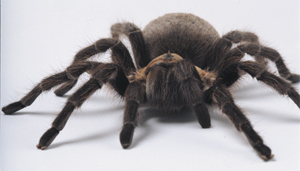 Not all spiders do well in captivity. Active hunters are usually easier to keep than web builders. Here are a few that make good pets.
Tarantulas: Some species exceed 10 inches in legspan. They’re by far the most popular pet spiders and can be bought in pet stores.
Wolf Spiders: Some can be more than three inches in legspan. Large specimens do best in terrariums with lots of floor space.
Jumping Spiders: Although small and rarely exceeding half an inch, their jumping ability is amazing. Many species are brightly colored and can easily be kept in jars.
Fishing Spiders: In captivity, these large spiders appreciate vertically arranged pieces of bark for climbing. They’re very fast, so use caution when capturing them.
Grass Spiders: These spiders build funnel-shaped webs in grass, bushes and on buildings. In captivity, they will build extensive webs inside their cage.
LEARN MORE: Click here to see photos of a spider expert’s seven favorite spiders
This is day one for me and I just caught 8 spiders today!! I am terrified of spiders and would hate to be bit or have one crawling on me but they are so fun to catch it’s a great challenge especially being scared of them it’s an adrenaline rush. I can’t wait to name them all tmrw!
I actually have a small female spider but turns out there was a second one of the same species on a piece of bark I put in its enclosure. Now I have a male spider.😂
Do spiders eat caterpillars?
I like spiders but they are really scary and I can not lie.
Plz send me a name it’s a brown spider with a black stripe down its back if u know the gender from that plz tell me tysm
I just caurt one to day 5/4/23 I’m 9 and I don’t know what speshies it is but I made my own tiquerum and if you can plz send me top tips of how to get food and stuff like that tysm
I caught a spider a week ago and fed it some crickets. I dont know type he is so help me!!!! My spider has brown legs and a brown body his abdomen is very dark brown.
That’s the same spider as me Google how to tel a spiders gender and discribe that and then say which spider speshies is this I hope it works for you
i am 9 yers old i love!!!!! spiders i am going to get one wene i am older spiders!!!!!!!!!!!!!!!!!!!
There is an app called picture insect that tells you all the species of insects.
My dad caught me a spider that’s one of those small ones. I looked at this to find how to take care of it.
spider are so cool and cute
i love spiders so
THIS ISNT ABOUT TRANSFING UR BFF TO A SPIDER!!!!!
I see a spider in my backyard door
hey do you guys know if i can keep a money spider 1.) in A glass jar, 2.) what do i feed them?
Insects and get a bottle cap and put water in there and add it to it’s cage then itle get water to drink
Its good to learn about spiders, just discovered they also feed on coachroaches…
Would blood spiders work?
My mom hates spiders :))
My mom hates spiders 🙂
omg i want to get a tarantula so thanks so much 0w0!!!!!!
Tarantulas are my favorite. What’s your’s?
mine too!!!!
That’s a really good idea!!!
Om so in vermont we have very small spiders those do they need to eat or no cause i have like 50 others and the smallest one i had i didn’t feed it for like a week
and it died and i caught it in the winter.
wow.
I have a 2 fighting spiders, one male and one female.The female spider just lay eggs in her egg sac
cool
cool
Hi that was an awesome article that really helped me
i have a woodlouse hunter (Dysdera Crocata) but it is still baby.
i knew theyd make a goood pet cuz mine died :I
Do spiders eat green worms. Leave cutters?
Not a bad idea!
This was a great artical! i’m planning on getting a spider so thanks for the help!
yes, spiders r friends
i,m going to cach a hobo spider they are huge.
I just caught a spider in my basement very small but big enough to be Caught and. Put into a new habit great
great advice
I agree that’s mean !
Wow!!! Thanks for the help