
How to Buy a Mess Kit and Camp Cooking Gear
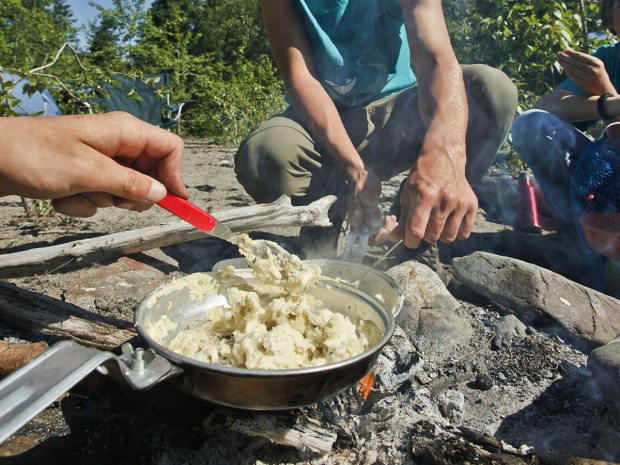
Chow time is one of our favorite things about camping. Whether it’s a steamy pot of cheesy pasta or warm biscuits fresh out of the Dutch oven, good food makes for good times on the trail. Proper nutrition is key when you’re hiking and spending time in the outdoors because it nourishes your body and your spirits. But cooking takes a little work and the right kind of gear.
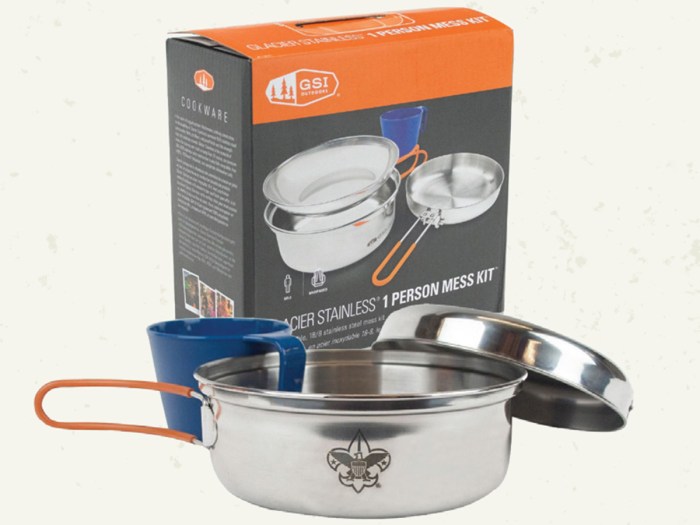
Just try to damage the BSA STAINLESS STEEL MESS KIT ($19.95, scoutshop.org) — it’s not likely. This durable kit comes with everything you need. It’s made from 18/8 stainless steel with a rustproof finish. The set includes a 1-liter pot, 6.3-inch frying pan, 5.9-inch plate and 12-ounce cup. The pot and pan have folding silicone-coated handles, and all the pieces nest together and fit in a mesh stuff sack. Coolest feature: You can use them cooking over a campfire or coals, and the pan can double as a pot lid. 1 lb. 1 oz.
MESS KITS
The term “mess kit” might seem old-fashioned. (Brief history lesson: “Mess” originally referred to a portion of food. As long ago as the 15th century, “mess” also meant a group of four people who sat to eat together.) Today’s camping and backpacking kits for cooking and eating offer a functional, neat modernization for a piece of timeless gear.
Often, the pieces (a cook pot, bowl, cup, etc.) nest together in a compact package that fits easily inside a backpack. These packages are generally lighter weight and more affordable than buying each piece individually. And with a mess kit, before each trip you can pick and choose exactly which pieces of the kit you want/need on the trail. Expect to pay from $10 to $30 for a basic kit.
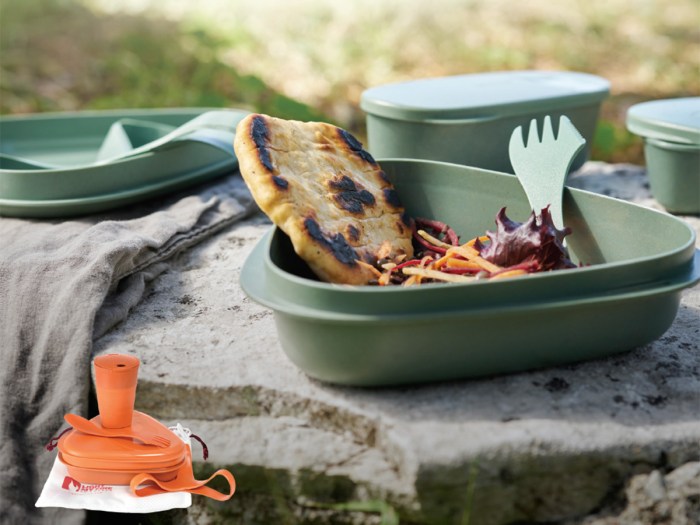
Want a mess kit that’s environmentally less messy? The LIGHT MY FIRE MESSKIT BIO ($24.95, lightmyfire.com) is made from reusable bio-based plastics. It includes a plate, deep-bottomed bowl, collapsible cup and serrated spork. Everything nests, and the kit serves as a lunchbox. 7.2-by-3.5-by-2.3 inches, 9.1 oz.
BOWLS, SPOONS, CUPS
The bare minimum you need for eating on most outings is a bowl, a spoon and a cup. An unbreakable bowl works well for everything you’ll eat, and a spoon (or spork) will help you shovel almost anything into your face.
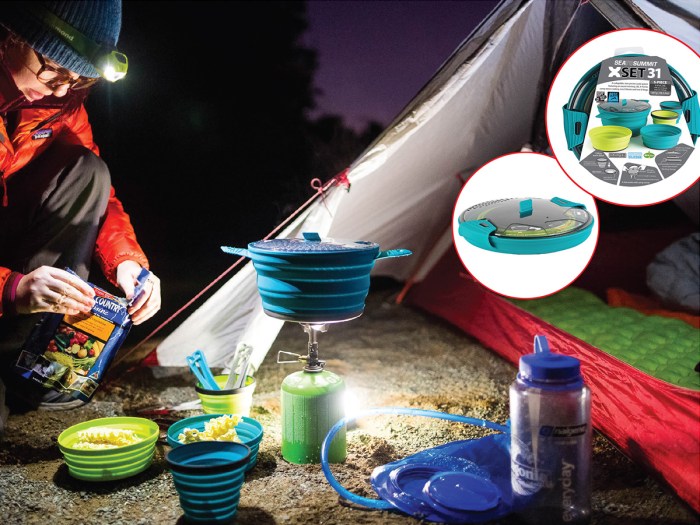
Arguably the coolest innovation in backpacking cook kits in years, the SEA TO SUMMIT X-SET 31 ($109.95, seatosummitusa.com) features a 2.8-liter pot, two 22-ounce bowls and two 16.2-ounce mugs, all of which have flexible, food-grade silicone walls that collapse. The entire nested kit measures about an inch and a half tall. The collapsible walls on the pot, bowls and mugs are rigid when assembled, avoiding spills. The mug walls have measurement markings. The pot’s aluminum base cooks evenly. Bowls, mugs and a collapsible pour-over coffee dripper can be purchased separately and nested into the larger kit or carried individually when backpacking. 1 lb. 5 oz.
STOVES
It’s not always best or even possible to cook by campfire. Open fires might be prohibited where you’re camping, maybe dry firewood is nowhere to be found, or perhaps you just want to have less impact on Mother Earth. That’s where backpacking stoves come in.
We recommend two basic kinds:
Canister (or cartridge) stoves: Small, lightweight and affordable stoves that screw onto canisters of pressurized gas (about $3 each). They’re easy to use and pretty much maintenance-free, but empty canisters aren’t refillable or recyclable and must be packed out.
Liquid-fuel stoves: Compact stoves that use refillable fuel bottles usually containing white gas or propane. They are extremely reliable and work well even in frigid temperatures. Liquid-fuel stoves are generally more expensive, slightly more complicated, and require regular maintenance and cleaning. But they’re also easier on the planet (and, eventually, your wallet) because the fuel bottles are refillable.
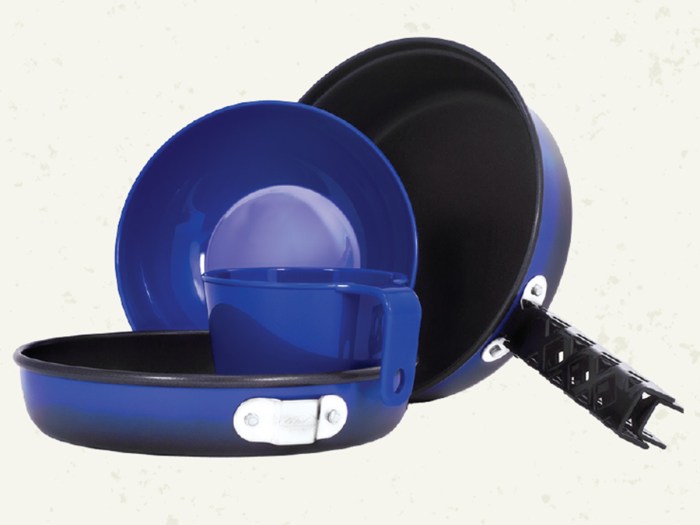
The GSI BUGABOO MESS KIT ($29.99, gsioutdoors.com) provides the implements for cooking and eating: a 1-quart pot, 7.5-inch pan, 6-inch polypropylene bowl, 12-ounce polypropylene cup and a gripper — all nest and stow in a mesh stuff sack. The kit’s aluminum disperses heat to cook evenly, and each piece has two layers of nonstick coating for scratch resistance. In all, a good value for a young camper, if a bit heavy for backpacking. 1 lb. 0.7 oz.
COOK POTS
On most outings, pots and pans are shared to save both weight and money. Pots can be made of everything from sturdy stainless steel to aluminum and super-light titanium. Stainless steel is the most durable and heaviest; aluminum is affordable and lightweight but not so durable; and titanium cookware is durable and super-light but very expensive. Prices range from $15 to $100, and some come with a nonstick coating. Always look for a pot that comes with a lid, because it speeds up boiling times and often can be flipped over and used as a frying pan.
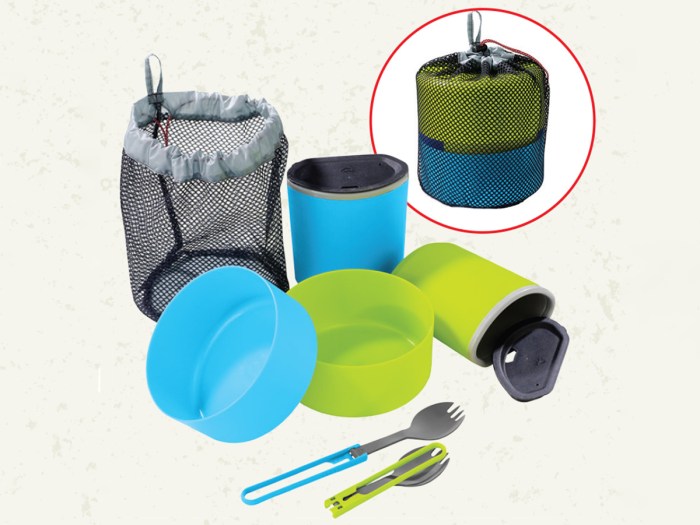
For two hungry campers, the MSR 2-PERSON MESS KIT ($34.95, msrgear.com) offers a simple lightweight kit: two plastic insulated mugs, two deep dish bowls and two folding sporks. The components nest and store in a mesh bag, measuring just more than 5-by-5 inches, making the kit ideal for backpacking. 13 oz.
DUTCH OVENS
A camping classic for decades, the Dutch oven is a heavy cast-iron pot with a lid. Though much too heavy for backpacking, this is a must-have for base camps and car-camping trips. Placing the oven over a campfire, you can easily fry fish, cook stews and beans, and bake pies, bread and cobblers. A new Dutch oven must always be seasoned first, rubbed inside with grease or butter to make it nonstick and protect the metal from rusting.
Awesome, i will definitely buy the “Camp Chef Stryker 100:.
We use the coleman ones,they can pack up like a suitcase.A bit heavy though
Check out the Stanley stainless steel cook sets, multiple sizes for every price range, heavy plastic cups for drinking even hot beverages. Good stuff.
What about scout food? I didn’t see it anywhere.
To spendy
yes
I need this in my life…lol
I want this… Where do I buy it?
Where can i find or buy it & how much does it cost?
How much are the backpack kitchens so awesome would love to have one
Love that the article opening picture is a 70’s era BSA mess kit.
The grub hubs are awsome I have one and personally know the guy who came up with them. I recommend them
It’s not a good idea to season cast iron with butter. Butter will go rancid. Use vegetable oil or shortening.
The coleman fuel stoves are still currant. Hang onto these beauties. We have two, great to cook on. Just use them correctly. They pack up like a suit case. No bulky gas bottles
What is next boy scout camper? Teach surviver skills
Would love to own one, but the price is ridiculous for a family. I mean, camping is family fun and over the years it is getting just as expensive as going to a resort or something!
Are the camp kitchens for sale and where can they be purchased??????
Many, many, many, years ago when I was a Scout, my mess kit consisted of 2 Marie Calendar pie tins. Not the ones now, but the heavy gauge tins. They served as bowl , plate, and were durable enough to use as shovel or scoop in a pinch. Now that my son is transitioning to Boy Scouts I wish I had save the pie tins.
This information is very helpful. Thank you.
Where I can buy it?
This is awsome exspicially for homeless
Thanks for the information. We taught the scouts how to make different kinds of stoves from cans. It was a great learning project and they were motivated to go camping even more.
love optimus!
Tried the wok idea and it was great. Thanks a bunch.
nice i guess
fozzils are amazing, durable, and ultralight
great deal
Helpfull
Try a small wok, it’s excellent and super easy to use; cheap too.
Our patrol just got 4 all new GSI Glacier cook sets, WOW. Nice and easy to clean.
Mountain House meals require only a pot to boil water and a spoon or fork.
Have you priced these out though? At $7-$10 a meal, what scout could afford a 6 day hike paying these prices? You’re talking $120-$180 for an outing per scout. Ouch!
Normally if its just a 1 to 2 day trip then that easily affordable plus most meals can feed to people. me and my dad do it like this, every time we go to the store we get like two or three Mountain Houses'(That way you dont spend $120 at once). if we go to the store say, seven times a a month we can collect about 15 meals. Thats enough to last a long time. And if you can get them at discount price then they are much cheaper
Too expensive
That’s not cooking. It’s reheating. All you’re learning is how to shop at REI.
I use some simple army mess tins and they are perfect.
Just use a pot nothing fancy
This topic seems to be the hardest for my new scouts to figure out. Through use, we have found the scout mess kit inaddiquite, it crimps in packs and the handle of the small pot tends to not be centered so items tip out and the pan handel can’t hold any real weight like hamburger w/o bending. Most of our scouts still wanting a mess kit use a military kit made of steel; they’re read good and often cheaper. Our older boys use Orikasu foldable meal kits. They lay flat in a back-pack, weigh almost nothing and clean real easy with a drop of camp suds. (I’ve had mine for 4 years now) For pots we carry the GSI 4 piece kit. They too clean up real easy and can handle campfire cooking. For messy cooking where pot cleaning might not be easy, we carry #10 food cans w/ bail wire attached for handles; once used, cut the bottom off, flatten and dispose of when possible. Since its been recycled, it’s also a green concept.
For silverware the light my fire unit gets an A+. We did break one once but the scout was at fault.
As always, try several items and then choose what’s best for you.
If you are camping in a stationary place, and not hiking or backpacking, cast iron cookware is the way to go. The initial investment you make will last you more than a lifetime, is nonstick and versatile.
WARNING!!! STAY AWAY FROM ALL TETHLON COOKWEAR BECAUSE OVERHEATED TETHLON CAN BE POISONUS!!!PLEASE RESEARCH THIS (BUT NOT FROM CAMPING COMPANYS BECAUSE THEY ARE THE ONES SELLING THEM!)
STAY WITH STAINLESS OR TITANIUM.
Thank you for being concerned!
get coleman cookware its great
I love the GSI Pinnacle Soloist cookset. It is great for backpacking because it is so light and small, but it is just as tough as other base camp cookware. You can fit a small canister stove (and canister) in it. The lid is great because it has a strainer built into it, and it fits the small bowl/cup that the cookset comes with. And the stuff sack doubles as a washbasin.
GSI makes some cool cookware.
stay away from allumiun it absorbs tatse and doesnt handle high heat well
fozzils are wishful thinking. ask anybody that owns them and they will tell you that you cant ever get oil or grease off them.
but thats cool if your a vegetarian 🙂 I’m not one 🙁
Mountain House and Backpacker’s Pantry have lots of meals that are very easy to cook, and are great for backpacking as well as regular camping.
If you have your own cookset, make sure you have some stuff to help with cleanup when you use them. A roll of paper towels, a steel wool scrubbie, and a dry cloth in a plastic baggie works well.
By the way, the steel wool scrubbie can be an emergency fire starter if you have a battery!
A Light My Fire spork is very good for any form of camping. I have ran mine over with a semi and it didn’t get a scratch!!!!!
great article, I carry a spoon,small pot, small titanium tea pot, Tupperware bowl with lid and a plastic mug. sometimes a Frisbee for a plate if more then myself will be eating out of my pot.
Military mess-kits are very good for your personal eating kit. You can find them at any army-navy surplus store. They are very cheap and very durable. If you could use it in war, I think it can survive us boy scouts!!!!
the light my fire mess kit is the best its light durable and has everthing you need and is way better than the bsa metel one
I agree with Mountain Camper 201
good guide very helpful
The Cub Scout and Boy Scout aluminum Mess kit doesn’t require alot of room in the back pack, is durable enough to be cleaned using steel wool and hand wash dishwashing liquid, and may be adapted to itself to create a small single serving soup kettle, an aluminum skillet to fry sunfish and small carp on, and has a folding eight ounce aluminum drinking cup. The mess kit is a great item to cook with. All that is lacking from a complete backpacking kitchen are a quilted hot dish cloth to prevent burns from holding an aluminum skillet over a lit campfire and a backpacker’s cast iron skillet used to cook food and scare away wildlife who may be interested in whatever a person is preparing for a meal.