
How to Buy a Backpacking Stove For Your Next Camping Adventure
A lightweight backpacking stove provides a welcome hot drink and meal in the backcountry and might become critical gear if you must melt snow for water. Find the right stove for your adventures using these tips.
3 TYPES OF BACKPACKING STOVES
Backpacking stoves fall into one of three basic categories, according to the type of fuel they burn:
CANISTER STOVES burn isobutane-propane fuel in pressurized canisters and are popular for their simplicity, reliability, durability and power. Some are inexpensive, compact and ultralight. Designs range from tiny stoves that screw onto canisters to integrated systems.
Flame control and performance in wind vary and fall off sharply in subfreezing temperatures.
LIQUID-FUEL STOVES run on white gas and other fuels. A separate stove and fuel bottle require assembly, pressurizing and priming the burner.
Heavier and bulkier than canister stoves, they excel in subfreezing temperatures.
ALTERNATIVE-FUEL STOVES burn either solid fuel tablets or small pieces of wood. These stoves are popular with hikers for their low weight and simplicity, but they boil water and cook food slowly.
The BSA recommends you do not use liquid alcohol fuels, including isopropyl alcohol, denatured ethyl alcohol and ethanol. Use only fuels that are in accordance with the equipment manufacturer’s instructions. Do not modify equipment beyond its design limitations.
HOW TO CHOOSE A BACKPACKING STOVE
Canister stoves are widely popular and considered the most convenient for backpacking trips. Liquid-fuel stoves are often the choice of winter campers and mountaineers. And many thru-hikers prefer pocket-style stoves that take up little space in their already-stuffed packs.
Consider how you will use your camping stove, talk with your buddies to get their recommendations and check out a few of our favorites, shown on this page.
RECOMMENDED BACKPACKING STOVES
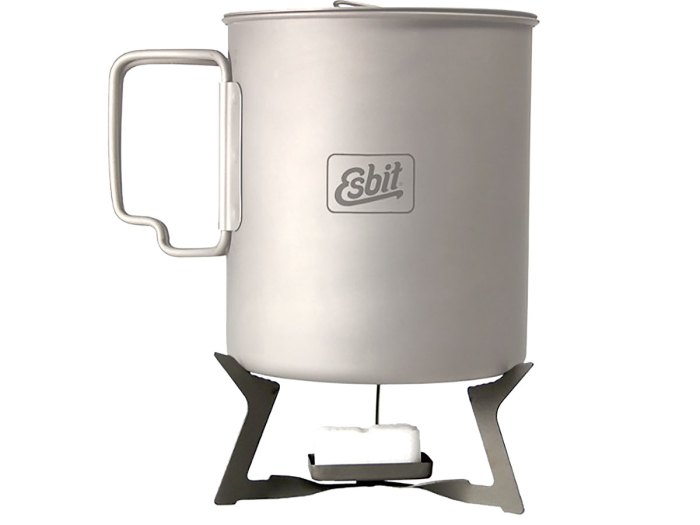
Few burners are simpler, cheaper or lighter than the ESBIT TITANIUM STOVE ($20, esbit.de). Its three folding legs open to suspend a small pot over a tiny tray where you light a solid fuel tablet (pot and fuel tablet purchased separately). Best if you’re going ultralight hiking; the stove lacks flame control and boils water slowly but reliably. 0.4 oz.
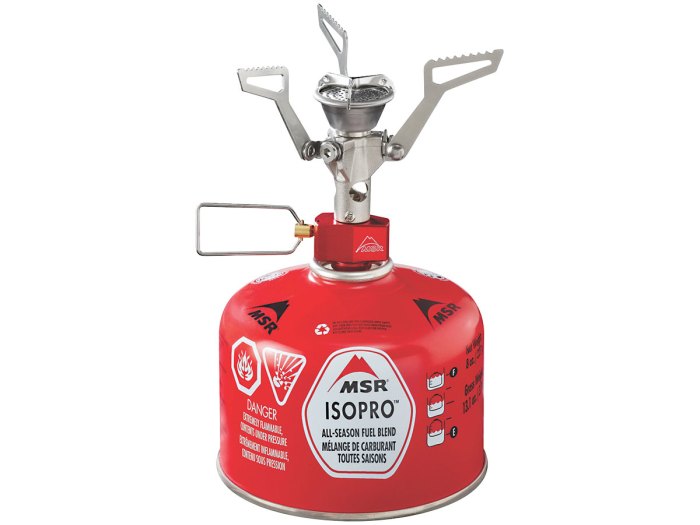
For simplicity, durability and price, it’s hard to beat the MSR POCKETROCKET 2 ($45, msrgear.com). Its folding support arms screw onto a canister and can handle a pot up to about 2.5 liters. It can boil a liter of water in just over 3 minutes, and the flame control won’t burn your noodles. Few stoves are lighter or more packable. 2.6 oz.
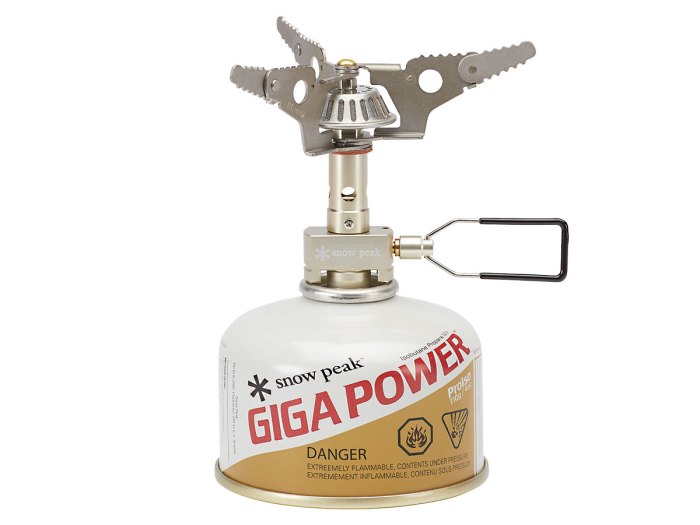
The SNOW PEAK LITEMAX TITANIUM STOVE ($60, snowpeak.com) offers the most power in the lightest, tiniest package. Made from titanium and coated aluminum, it has folding arms that pack small enough to close your fist around. When deployed, it can hold a small pot and quickly boil water. It also offers flame control. 2 oz.
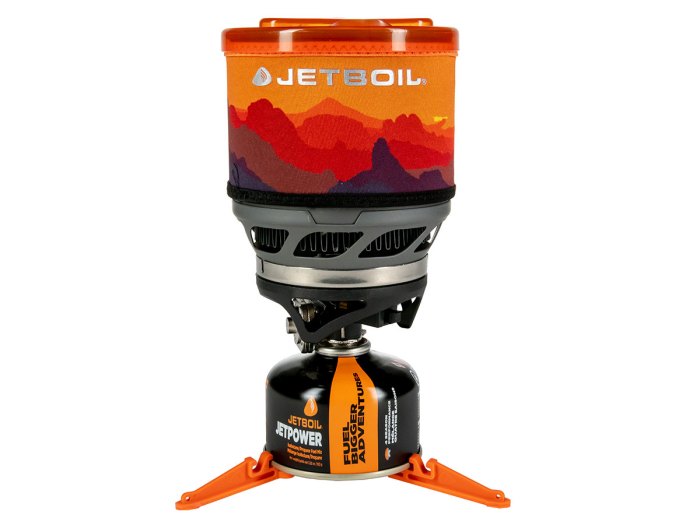
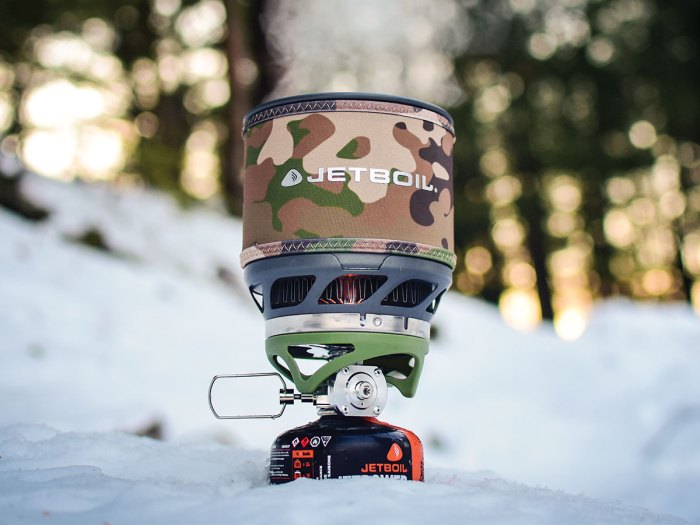
For backpackers seeking to step up performance in a cooking system that’s still reasonably light and compact, the JETBOIL MINIMO ($150, jetboil.johnsonoutdoors.com) integrates a 1-liter pot/cup with a burner and heat exchanger mounted atop a fuel canister. It has a push-button lighter, good power and flame control, and is twice as efficient as simpler burners (you carry less fuel weight). Bonus: In subfreezing temperatures, it has exceptional performance for a canister stove. 15 oz.
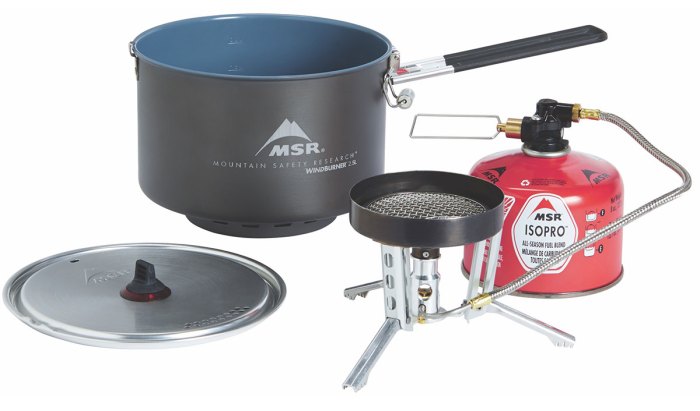
The MSR WINDBURNER GROUP STOVE SYSTEM ($200, msrgear.com) elevates efficiency to an art form. This all-in-one kit combines a 2 1⁄2-liter pot that sits securely atop an enclosed pressure-regulated burner, which connects to a canister via a fuel line. The ceramic-coated aluminum non-stick pot has a ring on the bottom that fits over the burner ring, centering itself while trapping heat. The design benefits include consistent heat output, a windproof flame with simmer control and the ability to boil a liter of water in about 6 minutes. 1 lb. 4 oz.
As with any flame, burning stoves consume oxygen. They also give off carbon monoxide, a colorless and odorless gas that can kill. Always cook in a well-ventilated place — not inside a completely closed tent or snow cave.
These are some nice options. I personally prefer ones that are compact and lightweight for shorter trips and then stoves that have more than one fuel option if ever for longer camping trips.
Stay away from Biolite, way too flimsy and most expensive product on the market. They are simply just not worth the money!
Awesome
What about the Trangia brand stove. It hasn’t changed since the eighties because it’s like a crocodile – it has not needed to evolve further. Easy to use no maintenance can be fuel heavy but wind and cold do not affect it.
Our troop uses MSR whisper lite as do most boy scout troops I Know. Each patrol gets one.
I have a jetboil that I have had for four years that has always worked even after I let Some of my scouts use it. 😌. It’s been knocked over and dropped, even had a scout pack everything into the cup backwards and upside down. I took it out and it still worked.
Msr camp stoves are great and affordable.
I have used my brass, Optimus Svea backpacking stove. It will boil 1L water at 10k’ in 6-7 min. I used it in the 70’s in my youth Scouting days.. Still using it a couple of times a month after 20 years as an adult leader. The roar is A good sound to hear in the morning.. Coffee will be ready shortly !.. only question I have is what is a ‘yearly cleaning kit’ ?
That’s awesome it’s lasted that long . They stuff back then a lot better then they do now .
One thing to remember is that butane cartridges can freeze. When weather gets cold enough put a cartridge in your sleeping bag when you go to sleep to keep it from freezing. That way you’ll won’t have to make a fire in the a.m. to thaw the slush in the cartridge enough to get pressure to run the stove for hot coffee or chocolate.
Ok. I tried to comment earlier but it doesn’t seem to have shown up. That’s OK because I was in error.
BSA policy prohibits the use of home made stoves in regards to chemical stove, this includes solid fuels. But, the policy does NOT address or specify homemade store in regards to biofuel (wood). A homemade wood burning stove may be frowned upon by some Scouters, but it is not banned. Building a homemade wood burning or woodgas stove is a valuable skill.
Woodburing or soild are allowed, even homemade.
I have purchased and tried the Solo Stove, which burns small sticks or denatured alcohol (take it in a metal container like the Coleman fuel for the Whisper Lites). I have not taken it camping yet, but it looks like a good alternative and uses dead sticks/branches from the area. (I have 2 Whisper Lite stoves and love them.) The Solo Stove boils water quickly (backpacking meals), and can be adjusted down by a slower feeding of the fuel. I am surprised that no one has mentioned it.
I do not like how close i have to get my hands to the stove to pump the container of fuel! Are there extenders? But other than that, these are great stoves!
We like the Pocket Rocket; simple and light to carry. It’s truly a stove made for us.
GIRL SCOUT?!!!!!
Stick with white gas stoves, they are superior to canister types. MSR make the toughest; I prefer the Dragonfly.
I agree. Two Philmont treks and many summer camps and my Dragonfly still outperforms all others. Easy maintenance and it’s ready to go.
I made a small wood stove out of a large peanut can with air holes on the bottom and coper wire for a handle. Best part about it is you can burn any non toxic substance in it, so you don’t need to bring fuel if it hasn’t rained in a wile.
Refer to the BSA Chemical Fuels policy and the guide to safe scouting…
HOMEMADE STOVES ARE NOT ALLOWED!
Actually the BSA policy is only with regards to homemade stoves that use chemical fuels. Homemade wood stoves are not prohibited because they don’t use chemical fuels.
My dad made a stove out of a pop can. Super cool!
jetboil all the way its also a good stove
Jet boil is not a stove, it’s a water boiler. Try cooking pancakes on it, or a steak, or a fish filet. Enough said.
You can remove the canister from the base with a simple twist and viola’ you have a back back stove. I recommend using a frying pan to cook your food on.
i love the Esbit pocket stove. it is a boss for under 15 dollars.
Where did you get a cool stove like that?!! I need one very badly, now that I heard about them!!!
Try a camping store; they are everywhere.
Just remember that the fuel tabs don’t have real long burn times and they don’t simmer.
There is an ultralight titanium stove for the esbit tabs that I think weighs under an ounce.
I bought one of the regular ones for an emergency kit. If all you have to do is boil water they work just fine.
MSR Dragonfly
I agree, MSR Dragonfly all the way.
My favorate is hexamine solid fule tablets
ps. – everyone should learn how to make a “pop-can” stove. It came in handy in a pinch…
But please remember to never use one on a scout outing. They’re not allowed in scouts according to the “Guide to Safe Scouting” as is any home-made liquid burning stove. Also do not use alchohol, auto gas, jet fuel or tiki torch fuel as a stove/fire burning source either. If you do you’re subject to disipline and not covered by the BSA insurance. The can stoves have been known to break down and cause injury.
BUT, homemade woodburning stoves ARE allowed
When has a can stove cause more of an injury than a wood fire or normal stove if anything its safer than other stoves because there is no pressurized liquids that can explode
There was an adult leader from my former (now defunct) troop who found out the problems with can stoves the hard way. It is not safer than a campfire or normal stove. He wound up catching his legs on fire and couldn’t smother it. Stop, drop, and role did nothing (and to add insult to injury, it was in a cow pasture and he rolled through some cow pies). Only when all of the fumes were burned up did the fire go out.
After 10 years as a survival instructor, international traveler and spending a lot of time with a pack on my back I have used many types of stoves. I highly recommend liquid fuel stoves over canister stoves except in very specific situation. I currently use a Primus stove and it is nearly indestructible. This stove burns “anything”, liquid fuels and canister fuel. It is completely field serviceable as well with a small tool that is included. These stoves tend to be on the expensive side but will outlast anything else out there.
Keep on Trekking,
Which Primus stove do you like?
MSR Dragonfly all the way !!!
I have been camping for 14 years and I recommend the whisperlite international. it burns most of your liquid fuels and diesal plus auto fuel.
i like using home made alcohol stoves from pop cans but sterno works in a pinch.
pop can stove, there cheap and great. run’em off anything
thank you
what is a good stove
Jetboil is a really good stove
After 22 years of scouting and trying many stove types (13), the MSR Dragon fly is tops on my list. Unlike many others, it is fully flame controlable from a jet engine to a minimal simmer thus saving fuel. It also has several features other stoves don’t: a self cleaning fuel line (Simply shake the unit and its clean), variable fuel bottle sizes, multi fuel options, and can fold up for compactness. A 21 oz bottle of white gas lasted 6 of us 5 days in the BWCA.
If cost is an important element, we start our new scouts out with the coleman peak stove (Silver model w/ self-contained fuel tank). It’s not as fuel efficiant but is tough as nails and only costs us about $35.00 each at the local camping store.
We have tried several butain type stoves too including Jet Boil (2 different models)and the Optimus Crux and feel it’s like throwing money away because of the cost vs use time. Secondly, they both froze up during the klondike derby leaving us in a pinch; thus making them useless in Minnesota 4 months every year and on our high alttitude adventure in Montana last year.
For base camp camping in the warmer months, the boys do occasionally use propaine and butain stoves that they own because they are simple and room is not a major factor, we simply do not suggest them as a primary stove if you are going to own only one stove. As I suugest to eveyone, try several stoves out before buying one.
As I always suggest, try several stoves and then decide what’s best for you.
More of an essay than a comment
Thank you for your detailed response. I especially appreciate the Why and Why NOT portion ;-)\
Can anyone recommend a stove that I could use for the pacific northwest?
i have a primus classic trail and it is EPIC. plus its 25 bucks. Its great and you can find it at rei.
i agree with dfxscghyjv;ik jetboils work great. i have a camo personal cooking system.i went backpacking with 10 people from my troop for 3 days and boiled water to cook and clean with for almost every meal and used only about half a canister of fuel. i also bring it with when i play paintball to cook inbetween battles. if u get one u will need a stablizer.
Don’t get a jet boil a basic canister works better.
My Coleman Peak 1 micro stove works really good.
I like the MSR Whisperlite which is the picture on top of this article.
I prefer hexamine stoves as they cost only $1 and really light and compact.
back packing stoves are really good and the white gas is ten at gander mt and bass pro and at dick sporting goods
I love this article, ive been searching all over the web for how much money to buy white gas for and this article gave me the straight on answer that i needed
I love my whisper lite it burns white gas through diesel fuel
As Az
jetboils work really really good and they are compact