
How to Build Your Own First-Aid Kit
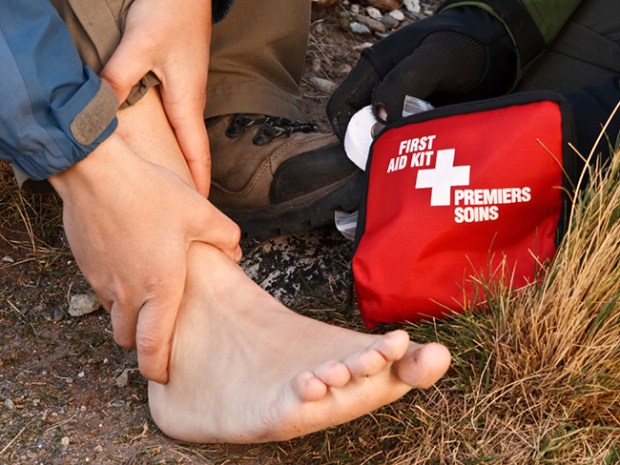
You’re on an outing with your troop when a buddy slips off the trail and messes up his leg. Miles and at least a day’s hike from the nearest trailhead, what are you gonna do?
Hopefully, you have the first-aid training and supplies needed to care for your friend. If not, earn your First Aid merit badge ASAP — and read on for advice on assembling a useful first-aid kit filled with the right contents.
THE LOW DOWN ON FIRST-AID KITS
Build It or Buy It?
The biggest advantage to building your own first-aid kit is knowing the contents of your kit and where it is inside. The hard part is buying everything you need in small enough sizes to keep your first-aid kit light and compact.
But buying a prepackaged first-aid kit often costs less, requires no set up time and usually comes in a specially designed storage bag with handy pockets and compartments.
If you buy a commercially made first-aid kit, just make sure you take everything out of it and then put it back in so you’re familiar with all of the contents and components. Understand what each item is used for so you’ll be prepared, and don’t hesitate to add additional items.
Price
You’ll often save money by buying a prepackaged first-aid kit. A decent first-aid kit can cost as as little as $10 to $25.
Customizing a First-Aid Kit
The type of first-aid kit and supplies you bring will be dependent on your group size, trip duration and remoteness. For remote locations you’ll need to rely on your group’s resources, and your first-aid kit should be stocked with supplies to treat a much wider range of injuries or illnesses than for a day hike in the woods.
Make a list of the types of activities you do most often and the sort of places you most often go and how long you’ll be gone, then build or buy a first-aid kit to fit.
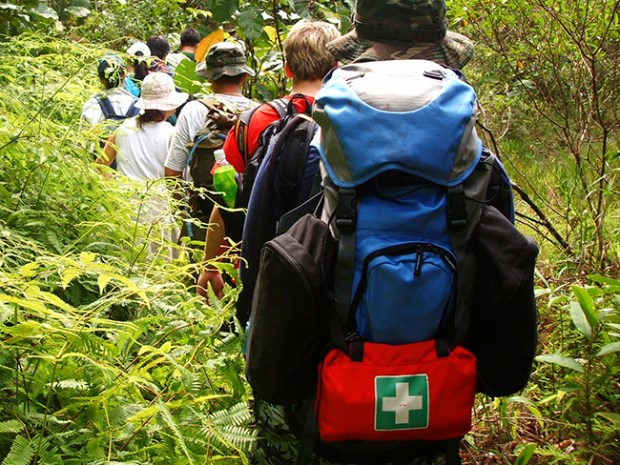
What Every First-Aid kit Should Include
Don’t forget to pack a first-aid manual. Nothing takes the place of first-aid training, but it’s important to have a good manual that you can turn to in an emergency. Beyond that, you’ll want to include supplies to treat the most common outdoor injuries — stuff like moleskin for blisters, tweezers for splinters, bandages, antibiotic ointment and antiseptic towelettes for cuts and scrapes, ibuprofen for aches and pain, and antihistamines for allergic reactions.
What You Should Leave Out
Skip the instant ice packs. They’re heavy and only provide about 15 minutes of cold therapy. To properly treat a sprained ankle, you need to ice the injured area every 30 minutes. Use ice from a cooler, snow or cold water from a river or lake if you need to improvise.
And forget the hydrogen peroxide — it’s so strong it kills the germs and living tissue, so it’ll just take longer for your wound to heal. The only solution you need to clean wounds is clean drinking water or a dilute povidone-iodine solution if the wound is particularly dirty.
Keep Your First-Aid Kit Current
Make a contents list so you can keep an inventory of items in your first-aid kit. Get into the habit of checking your first-aid kit before every outing. If any medicines and ointments have expired or have been used up, replace them. And make sure nothing is wet or spoiled.
BUILD YOUR OWN FIRST-AID KIT
As it says in the “First Aid” merit badge pamphlet, “the worst first-aid kit is the one that never gets made.” Make sure that doesn’t happen by buying a good first-aid kit or building one yourself.
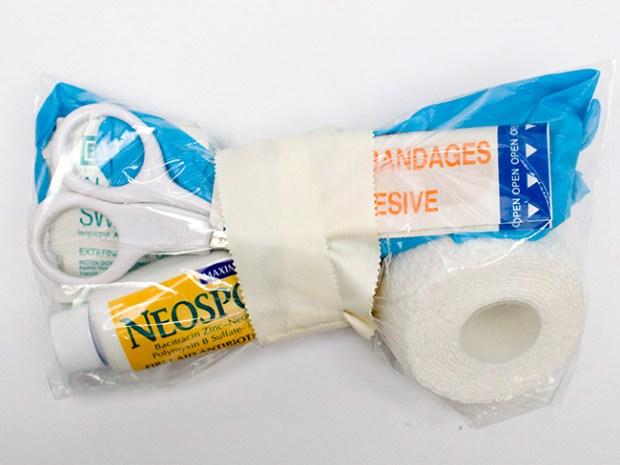
Personal First-Aid Kit
A personal kit should have the necessary supplies for treating minor injuries like scrapes and blisters. This can be kept in a resealable plastic bag or hip pack. Here are the basics for your pack:
- Six latex-free adhesive bandages in assorted sizes
- Two sterile 3-by-3-inch gauze pads
- Small roll of latex-free adhesive tape
- 3-by-6-inch piece of moleskin
- Disposable latex-free gloves
- Tweezers
- Scissors
- CPR breathing barrier
- Small bar of soap or small bottle of alcohol-based hand-sanitizing gel
- Pencil and paper or small notebook
- Small tube of antibiotic ointment (optional)
- Small tube of hydrocortisone cream (optional)
Some people are allergic to antibiotics and hydrocortisone creams. Be sure to ask permission before applying any ointments. People can also be allergic to latex, which is why it’s important to use latex-free products.
You can find preassembled first-aid kits at the Scout Shop.
For the Patrol
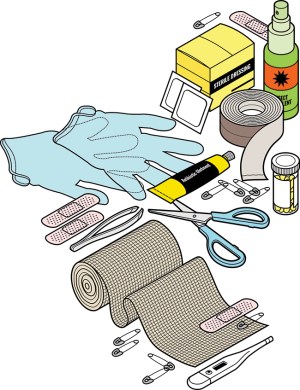 A larger kit can have items to address more serious emergencies. This first-aid kit should cover one patrol on a typical outing:
- First-aid manual, like the “First Aid” merit badge pamphlet
- 1 2-inch roller bandage
- 2 1-inch roller bandages
- 2 rolls of 1-inch adhesive tape
- 6 alcohol swabs
- Water purification tablets
- 12 assorted adhesive bandages
- 2 elastic bandages, 3 to 6 inches wide
- 12 3-by-3-inch sterile pads
- Antiseptic towelettes
- 2 triangular bandages, 40-inch
- 2 3-by-4-inch nonadherent sterile dressings
- 5-by-9-inch trauma pad to stanch bleeding
- Moleskin
- 3 butterfly closure bandages
- Petroleum jelly
- Antibiotic ointment
- Insect repellent
- Scissors
- Tweezers
- Safety pins
- Aloe vera gel for sunburn
- 2 pairs latex gloves
- Mouth-barrier device
At Home
Gather these materials and keep them in a handy spot in the house:
- First-aid manual, like the “First Aid” merit badge pamphlet
- 2 2-inch gauze bandages
- Roll of 1-inch adhesive tape
- 12 3-by-3-inch sterile pads
- 12 assorted adhesive bandages
- 2 elastic bandages, 3 to 6 inches wide
- Thermometer
- Scissors
- Tweezers
- Box antiseptic wipes with benzalkonium chloride
- 2 pairs latex gloves
- Safety pins
- Calamine lotion
- Eye goggles
- Mouth-barrier device
- Small bottle antihistamines (Benadryl)
- Small bottle acetaminophen for pain and fever
- Small bottle ibuprofen for inflammation, muscle aches, pain and fever
Plastic sheet, plastic bag for clean up that bloody mess and matches (just in case)
helpfull!
Can i use the perosonal kit list for first aid merit badge
Non-Latex Gloves should be used instead of Latex gloves! Many people, such as myself are highly allergic to latex. This can be downright deadly!
Good info.
Vet wrap instead of adhesive tape and roll gauze. It’s essentially roll gauze that sticks to itself, can be cut into strips for smaller areas (fingers especially) and keeps wounds protected from dirt better than anything on the market. Can be found at vet supply places (like tractor supply).
One thing I add for outings like High Adventure, Mountain Biking, Bouldering & Climbing, Whitewater or in Snake Country, basically anywhere severe injury is more likely is a Commercial Quick Tourniquet. Ad-hoc tourniquets work, but in severe bleeding cases, ripping open a purpose-made device can save a life NOW. A person can nearly bleed out while you make a field expedient tourniquet. Fast is better.
Why would you need a tourniquet for snake country – tourniquets are not to be used for snake bites
if the snake is venomous it slows the venom from reaching the heart where it will be fatal by slowing blood flow
Hi,
helpful tips to build our own first aid kit at home. Thank you for the post.
hola
What about bandades?
you have gauze and tape for that.
That’s what the 12 assorted adhesive bandages are.
Chance
Thanks really valuable. Will share website with my good friends.
Helpful yay
ummmmm what is this about
Derp
FIRST AID
Why do I need hand sanitizing gel in my kit?
Make sure to bring an epi pen and some benydryll if anyone in your group has life threatening allergies.
Benadryl is an antihistamine, which is mentioned in the article
why not?
Should I use water purification tablets as the main source of purifying water? I mean, do they really work well enough to use often?
If your in the woods, your personal first aid kit should fit in a snack baggie or no more than a sandwich baggie… keep it simple, you patching a hole till you can get to help or home!
your first – first aid kit should be your wallet – your ID, phone numbers, couple of band aids, money. a cell phone is a great tool for emergency.
yes
The best first aid kit is at REI
If you make your own it is not only cheaper but if you back pack you can make it as light as you want. Another thing that I did a while back was buy a pre-owned kit and used the nice bag disin and storage areas to make it fit your own needs.
WHERE CAN I BUY A FIRST AID KIT?
You could look online
the store
one thing i did was use two gallon freezer bags to make it water tight.
Regarding the instant ice packs…I personally find them useful. Day hiking or biking you are not going to have a cooler of ice and may not have a cool source of running water. In Southern USA the chance of find snow or ice, anywhere on a trail, might happen a couple months in a Season. The Ice Packs have been added to my gear and used as with a small battery operated fan (1″x 3″). Heat is a killer. Wrapped, the packs can be placed under arms and back of neck to help cool core temps, they’re not as cold as ice. Also good for sprains, strains, bug bites, and bumps/bruises. Warning… they too do not like the heat. If left in a hot vehicle or like situation they will become useless. Humidity/condensation will clump crystals.
One of the best things to come along in years was the ziplock bag. We put all our first aid supplies in them. They fold flat and keep out water and other elements.
And just where are we supposed to get those mouth barrier things?
Red Cross sells them; $20.00 for hard barrier, $2.50 for soft / disposable barrier.
you can get the cpr barrier online
coolman360 that’s right. they also sell them in military edition for much more intense wounds
good info
I want my First-Aid kit to be the size of an Altoids can. What would I put in a First-Aid kit that small?
Your phone number; that way someone can call your mom and let her know you were hurt and what hospital you’re going to.
Our Cub Scout Pack made altoid tin kits. Each one fits 3 adhesive bandages, 2 alcohol wipes, a pair of gloves, a piece of moleskin, 2×2 gauze pad. If you use a rubber band to keep it closed you can fit a small tube of antibiotic ointment inside.
Our boys make their own first aid kits. a small peanut butter jar works very well. Being round, tape fits in it easily and the tape center holds small asprin containers perfectly. it has a lot of room for other items like gaze, Band-Aids, ointments, gloves and seal up water tight. This way the boys can personalize their kits to their needs. The Troops EMT bage covers the big stuff.
Not a great idea if you are helping someone who is severely allergic to peanuts.
I highly reccomend putting your own together or looking through a storebought so u know whats in it.
Im a new scout and i used this to get to tenderfoot
(Yes I Help With Lots Of Things)Dont Waste Your Money On Large First aid Kits That Have Too Much And Are Heavy. You Can Get a Simple $20 Dollar Kit At Target, Walmart, RiteAid Or You Can Make Your Own!
i have been interrested in first aid kits, but this one is the best
Military surplus stores carry gear bags that work great for first aid kits.
Cool