
How to Build Your Own First-Aid Kit
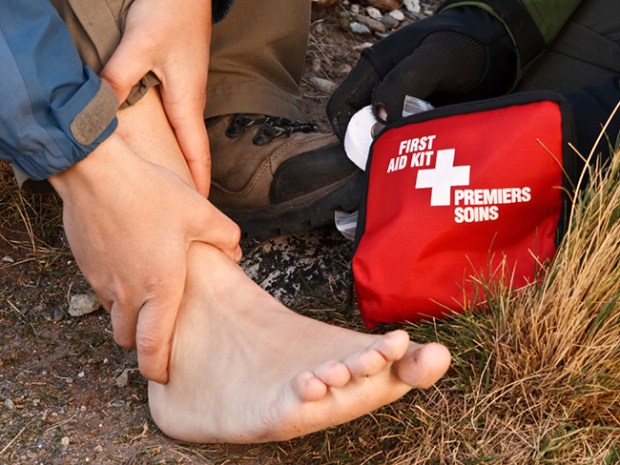
You’re on an outing with your troop when a buddy slips off the trail and messes up his leg. Miles and at least a day’s hike from the nearest trailhead, what are you gonna do?
Hopefully, you have the first-aid training and supplies needed to care for your friend. If not, earn your First Aid merit badge ASAP — and read on for advice on assembling a useful first-aid kit filled with the right contents.
THE LOW DOWN ON FIRST-AID KITS
Build It or Buy It?
The biggest advantage to building your own first-aid kit is knowing the contents of your kit and where it is inside. The hard part is buying everything you need in small enough sizes to keep your first-aid kit light and compact.
But buying a prepackaged first-aid kit often costs less, requires no set up time and usually comes in a specially designed storage bag with handy pockets and compartments.
If you buy a commercially made first-aid kit, just make sure you take everything out of it and then put it back in so you’re familiar with all of the contents and components. Understand what each item is used for so you’ll be prepared, and don’t hesitate to add additional items.
Price
You’ll often save money by buying a prepackaged first-aid kit. A decent first-aid kit can cost as as little as $10 to $25.
Customizing a First-Aid Kit
The type of first-aid kit and supplies you bring will be dependent on your group size, trip duration and remoteness. For remote locations you’ll need to rely on your group’s resources, and your first-aid kit should be stocked with supplies to treat a much wider range of injuries or illnesses than for a day hike in the woods.
Make a list of the types of activities you do most often and the sort of places you most often go and how long you’ll be gone, then build or buy a first-aid kit to fit.
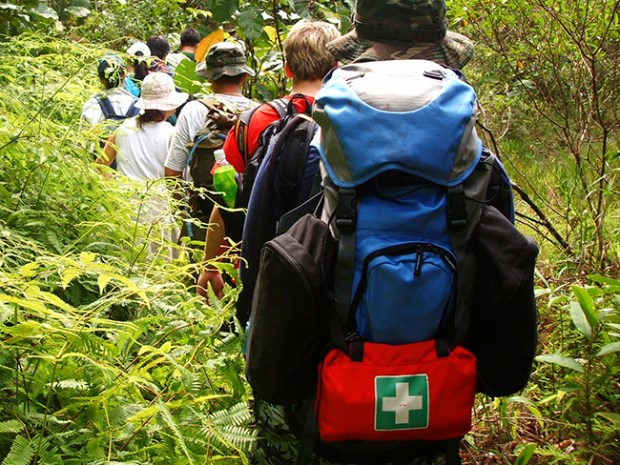
What Every First-Aid kit Should Include
Don’t forget to pack a first-aid manual. Nothing takes the place of first-aid training, but it’s important to have a good manual that you can turn to in an emergency. Beyond that, you’ll want to include supplies to treat the most common outdoor injuries — stuff like moleskin for blisters, tweezers for splinters, bandages, antibiotic ointment and antiseptic towelettes for cuts and scrapes, ibuprofen for aches and pain, and antihistamines for allergic reactions.
What You Should Leave Out
Skip the instant ice packs. They’re heavy and only provide about 15 minutes of cold therapy. To properly treat a sprained ankle, you need to ice the injured area every 30 minutes. Use ice from a cooler, snow or cold water from a river or lake if you need to improvise.
And forget the hydrogen peroxide — it’s so strong it kills the germs and living tissue, so it’ll just take longer for your wound to heal. The only solution you need to clean wounds is clean drinking water or a dilute povidone-iodine solution if the wound is particularly dirty.
Keep Your First-Aid Kit Current
Make a contents list so you can keep an inventory of items in your first-aid kit. Get into the habit of checking your first-aid kit before every outing. If any medicines and ointments have expired or have been used up, replace them. And make sure nothing is wet or spoiled.
BUILD YOUR OWN FIRST-AID KIT
As it says in the “First Aid” merit badge pamphlet, “the worst first-aid kit is the one that never gets made.” Make sure that doesn’t happen by buying a good first-aid kit or building one yourself.
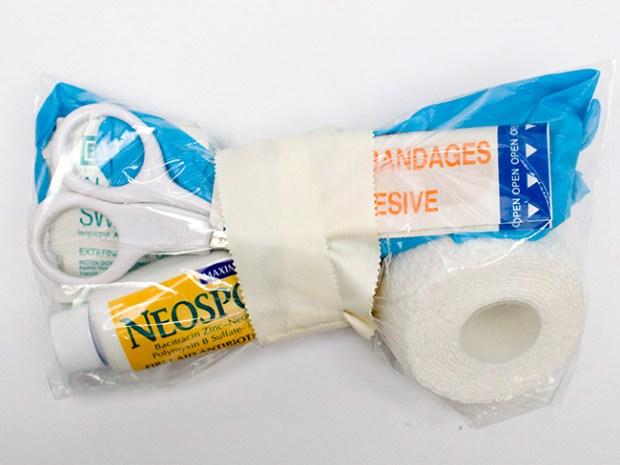
Personal First-Aid Kit
A personal kit should have the necessary supplies for treating minor injuries like scrapes and blisters. This can be kept in a resealable plastic bag or hip pack. Here are the basics for your pack:
- Six latex-free adhesive bandages in assorted sizes
- Two sterile 3-by-3-inch gauze pads
- Small roll of latex-free adhesive tape
- 3-by-6-inch piece of moleskin
- Disposable latex-free gloves
- Tweezers
- Scissors
- CPR breathing barrier
- Small bar of soap or small bottle of alcohol-based hand-sanitizing gel
- Pencil and paper or small notebook
- Small tube of antibiotic ointment (optional)
- Small tube of hydrocortisone cream (optional)
Some people are allergic to antibiotics and hydrocortisone creams. Be sure to ask permission before applying any ointments. People can also be allergic to latex, which is why it’s important to use latex-free products.
You can find preassembled first-aid kits at the Scout Shop.
For the Patrol
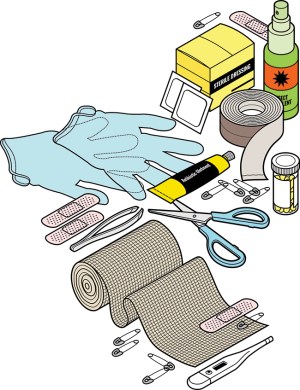 A larger kit can have items to address more serious emergencies. This first-aid kit should cover one patrol on a typical outing:
- First-aid manual, like the “First Aid” merit badge pamphlet
- 1 2-inch roller bandage
- 2 1-inch roller bandages
- 2 rolls of 1-inch adhesive tape
- 6 alcohol swabs
- Water purification tablets
- 12 assorted adhesive bandages
- 2 elastic bandages, 3 to 6 inches wide
- 12 3-by-3-inch sterile pads
- Antiseptic towelettes
- 2 triangular bandages, 40-inch
- 2 3-by-4-inch nonadherent sterile dressings
- 5-by-9-inch trauma pad to stanch bleeding
- Moleskin
- 3 butterfly closure bandages
- Petroleum jelly
- Antibiotic ointment
- Insect repellent
- Scissors
- Tweezers
- Safety pins
- Aloe vera gel for sunburn
- 2 pairs latex gloves
- Mouth-barrier device
At Home
Gather these materials and keep them in a handy spot in the house:
- First-aid manual, like the “First Aid” merit badge pamphlet
- 2 2-inch gauze bandages
- Roll of 1-inch adhesive tape
- 12 3-by-3-inch sterile pads
- 12 assorted adhesive bandages
- 2 elastic bandages, 3 to 6 inches wide
- Thermometer
- Scissors
- Tweezers
- Box antiseptic wipes with benzalkonium chloride
- 2 pairs latex gloves
- Safety pins
- Calamine lotion
- Eye goggles
- Mouth-barrier device
- Small bottle antihistamines (Benadryl)
- Small bottle acetaminophen for pain and fever
- Small bottle ibuprofen for inflammation, muscle aches, pain and fever
Commercially made kits are not worth the price. The supplies included are usually of poor quality and are not always effective. Build your own. You will know where everything is and how to use it. You can also stock it with higher quality supplies that will in turn be effective and worth the cost and trouble.
Our unit has the boys make their own first aid kits. a small peanut butter jar or parmasian cheese jar work very well. Being round, tape fits in them easily and the tape center holds small asprin containers perfectly. They both have a lot of room for other items like gaze, band aids, ointments, gloves and seal up water tight. This way the boys can personalize their kits to their needs. The Troops EMT bage covers the big stuff.
dddduuuuuhhhh
i got a $100 first aid kit that was unopened for free
WOW! Nice dude!!=)
Good first aid is the vry useful thing in our life so aal the places home,car,school every where we should keep first aid box…..i have in my home…..
A few years ago I found it hard to find refills of single use tablets and ointments (such as triple antibiotic). REI and other outdoors stores now carry more, but the best bets are online. Look for “unitized” first aid supplies or refills. Unitized means it is packaged for individual use.
For those who have made your own first-aid kits for the boys, what did you guys use? I want to have the boys (cub scouts) make their own or purchase a small case/bag so they can put their own items in it. Any ideas?
add meat tenderizer and water to put on bee stings
isn’t baking soda and water cheaper? thats what i used when i got stung.
THX MOM!!! =D
I want one of the kits with the mouth-barrier device. They don’t sell them in any of the stores I have been. Anyone know where to find them?
Check the nearest Red Cross office. One way valve masks cost about $20.00. The disposable masks cost about $4.00 each, but do not have a vomit protection valve.
walmart for 20$ i got a marine water rescue kit on sale, The baggy it comes in( about 10 in long) is perfect to blow up and use to keep someone who cant swims head above water. Great buy!
I do the BUILD IT YOURSELF First Aid kit
The Adventure Medical Kits “Ultralight Water-tight” series kits are great.
I like the water tight kits as weel, just be careful opening it. I didn’t realize where the ziploc was and ripped it.
this site is great you guys are all great helps
this is very important
i think that it is very important to keep a first aid kit
Thankyou for this article. It helps me a
lot!!!
They didnt mention this, but if anyone is on any prescriptions, they sell these small Zip lock bags at Walgreens, and they are great for holding a day or weeks worth of pills. so that a top one on my list.
If you are going to make your own 1st Aid kit, add a bandana into the supplies. Trust me, it will help a lot.
You can thank me later!
how
A bandana can help in several ways
-as a bandage
-a rag( could be wet and put on someone’s head or other part or also wrapped around fingers or toes to help treat frostbite)
-if big enough it can be used to immobilize ankle
-etc.
Also have ducktape in my troop it’s the eleventh essential of scouting
Here in the Idaho Mountains we live by 4 things. In order they are: Our Bibles, our guns, our knifes, and our Duck tape!
i <3 duct tape! =D
DUCK TAPE is number 1 key to survival
Around me they sell them in the camping section at walmart.
dos ani one know where i can buy a space blanket?????
the shiny kind.
cabelas, dicks sporting goods, and most online camping stores
any insect reppelen with no deet in it will not reppel mosqitoes
nice to know
I think you should always add Aloe Vera gel to your firt aid kit. I hear it takes burns away quick and good.
Which is the better quality producer of first aid kits for camping and backpacking–the American Red Cross First Aid Kits or the first aid kits produced by Johnson and Johnson?
Aloe is great if you’re not allergic to it, like I am. I’m one of 800,000 people in the world with this allergy and it could cost me my life if I’m not conscious, I think I should get a medical tattoo or bracelet for it
I do think it’s important to take the nesscesary supplies,
Otherwise if not, it will just be some extra weight
A couple brief comments about commercial (bought) first-aid packs.
First – the commercial packs are okay – and a potential rescuer can quite easily identify that they are a first aid kit. But you *need* to open them up, look through them (see what *is* in there – and more importantly, what is *not* in there) and adjust them for your own needs {diabetic? better have insulin; allergies? in goes the Benadryl}. Second, don’t assume your 6-year-old never-used first aid kit is good. Go through first aid (yearly, maybe) and replace out-of-date medications, cremes, etc.
I agree with TROOP45
its better to have a “made your self aid kit” than a purchased one, its cheaper and you always now where the stuff is.
i ‘m glad too about know this help for first aid kit keep it up informing us about this from ; max
it is very cool
yes first aids are cool but the one part about it is to take it with you on every camp out and boy life`s is cool
thanks for telling me this
im glad to knw this !
thank you, it helped me a lot !
Good advice!!!
We used the REI Backpacker for a 6 day trek last summer. It’s light and packs easily. There is plenty of room to add extra stuff. We added some extra pairs of gloves and a couple of triangle bandages in case we needed to improvise a splint. The only down side is that there are some hidden pockets that might might make things hard to find in an emergency. Fortunately we didn’t need to use much of anything.
thanx for this type of thing!
very helpful
Thanks BL I needed that help.
In any kit, be sure to use non-latex gloves and bandages.You cannot pick who you will be treating, and you will not know if they are allergic to latex.
This helps me a lot
Duct Tape! I never leave home with out it! I’ve backpacked over 4,000 miles and it is the only thing in my first aid kit that I use over and over again. It is significantly better than moleskin for blisters. Moleskin has a tendency to move or roll up when you do a lot of miles. Plus it is thick and sometimes creates a problem sore spot. The duct tape is thin and sticks extremely well. I’ve used it to splint fingers and a wrist, repair shoes, tent, pack, etc. I once made a cup to drink from. Great stuff. I just make several wraps around my walking sticks or water bottle and I’m good to go.
i agree duct tape rocks
Thanks dude21 I will try that! Anyone else have any suggestions?
Well Dragon like the guide said think about what you do and then pack or buy one that has the things you need for the trip. Also I think you need to look at a sporting goods store if you buy because they most likely have the items you need for the first aid kit and can help you choose one in your price range and help figure out what you need as well.
I am going on a fishing/camping/hiking trip and I want to ask what you would recommend for a kit that can provide for about five people on a four day trip?
ALWAYS PUT IT IN A ZIPLOCK BAG FOR WATERPROOF
We carry a big self-made first aid kit to the camp site. When taking a hike, we each carry a specific item. If there are only a few of us, we carry bandages and something for stings/cuts. That way we can replenish what we need when we get back to base camp. We also carry a whistle in case we need emergent help.
If you have an alergy allways bring benadryl or if it is bad, an epi-pin.
i don’t see the atvantiges to buying a first-aid kit when the ones u make are a lot better on price and you know what the things in them are always going to be because i bought a frist aid kit and half of the stuff was missing
TRY TO MAKE IT LITE A COMPACK WITH TO STUFF YOU NEED.
SO WHEN BACKPACKING/HIKEING IT WILL BE EASYER
and, breed,you have a weird web site name. does it mean to breed humins?
this is awsome don’t you think
Why is this website for all boys? I think you should make it for boys and girls. But otherwise, I love this website.
dudett, this is BOYS life!!!! duhh!!!!