
How to Buy a Good Rain Jacket
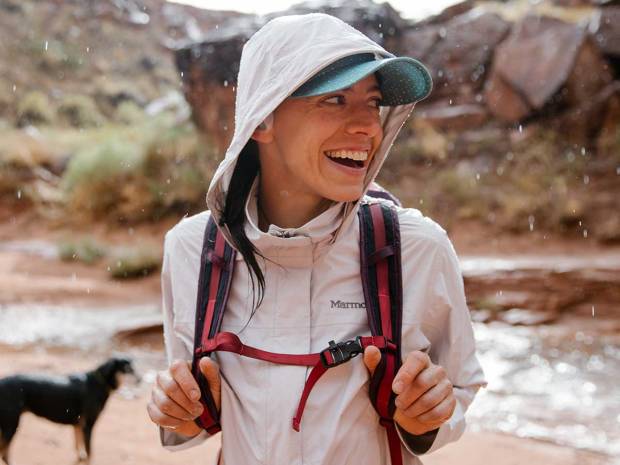
There’s no bad weather — just bad gear and bad attitudes. Rainy and windy? No problem. Just bring along a waterproof and windproof rain jacket. Here’s how to buy a good one that is sure to keep you dry and warm in any type of downpour.
THE LOW DOWN ON RAIN JACKETS
When experts talk about rain jackets, they usually categorize them as either hard shells or soft shells.
Hard shells are what most people think of when they talk about outdoor rain jackets. These are lightweight hooded jackets designed to keep out wind and rain. Standard rain slickers are considered hard shells, too, but we’re focusing on rain jackets that are also breathable, meaning they wick sweat away from your body. If you’re wearing something that doesn’t breathe, you’re going to sweat and get all the rest of your insulation wet because none of the moisture is going to be able to leave.
Soft shells are woven jackets that are wind- and water-resistant and totally breathable. Many soft shells use a durable water-repellent (a.k.a. DWR) coating on the jacket’s surface to make it shed rain.
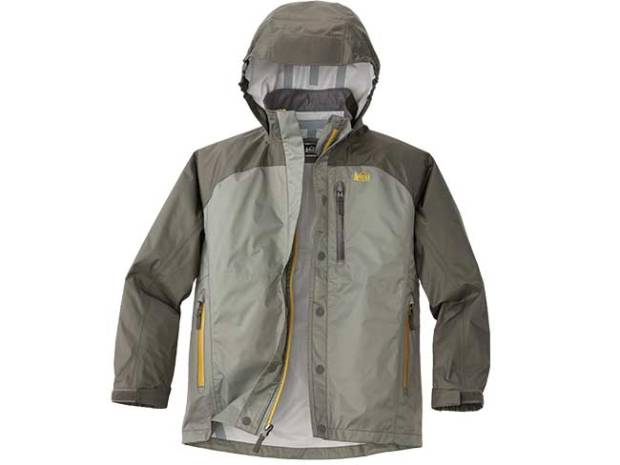
Rather than the coating used in many inexpensive waterproof-breathable jackets, the REI CO-OP RAINWALL JACKET ($65, rei.com) uses a more durable 2.5-layer laminate for weather protection and breathability. The three-panel adjustable hood with a brim stows inside the collar, and the jacket has stormworthy features like a longer cut, a front storm flap over the zipper, adjustable cuffs and sealed seams.
ONE RAIN JACKET FOR ALL?
If you can afford only one rain jacket, you should buy a simple lightweight hard shell. Hard shells are necessary equipment for heavy wind and wet weather because a soft shell jacket simply won’t give you the needed protection. That said, if you can afford both, a soft shell jacket is ideal for about 80 percent of your outdoor activities, and you can keep a lightweight, waterproof hard shell in your backpack for the nasty weather.
HARD VS. SOFT SHELL
Soft shells are generally more supple and more breathable but less windproof and less waterproof. Hard shells typically don’t fit quite as nice, but they’re usually more waterproof, more windproof and lighter weight.
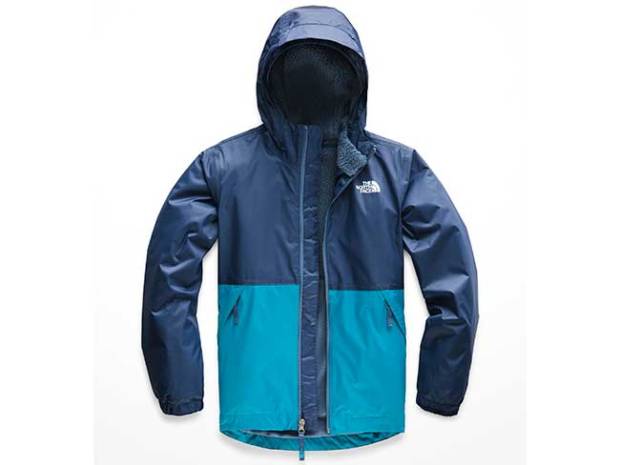
THE NORTH FACE WARM STORM JACKET ($90, thenorthface.com) is designed for cold-weather adventures like skiing. Waterproof-breathable and fully seam-sealed, it sports a full hood with a brim to keep rain or snow off the face — and there’s fleece lining in the hood, collar and upper body for added warmth. Zippered hand pockets secure valuables like a phone, and it has features like a rain flap under the front zipper.
WATERPROOF/BREATHABLE FABRICS
These are marketing words you’ll hear used to describe rain jackets. Usually these jackets are built with two to three layers of material, including a special membrane layer that keeps weather out while letting your sweat escape.
A common misconception when people are looking for a rain jacket is they think they need to see the words 100 percent waterproof on the tag. Depending on your activity, you might want a decent amount of waterproofness, but don’t get hung up on it.
Also, there are a wide variety of waterproof/breathable materials on the market. Some are more heavily advertised than others, but often the generic or “house brand” waterproof/breathable fabrics offered by manufacturers will work just as well for you. Gore-Tex, for example, is a fine product, but it’s only one of many waterproof/breathable fabrics.
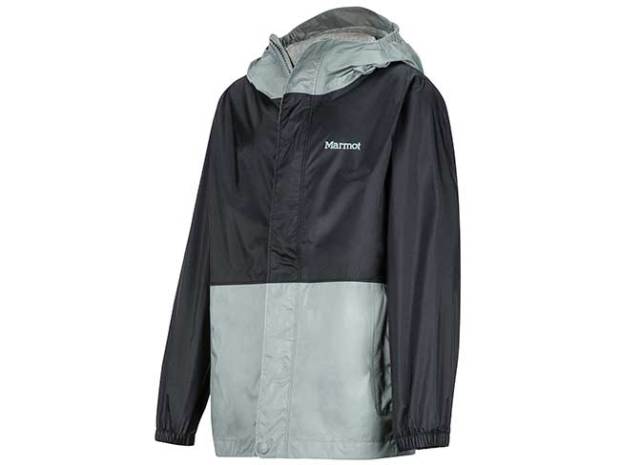
The MARMOT PRECIP JACKET ($70, marmot.com) offers great weather protection with its NanoPro waterproof-breathable fabric and taped seams. The technology will keep you dry in a rainstorm and breathes well enough to avoid overheating during moderate-exertion activity like hiking and light backpacking. The hood rolls up to stow away when not in use.
MAKE SURE YOUR JACKET FITS
You want a rain jacket to be decently trim. You don’t want it to be bulking out and getting in the way of your mobility. To make sure it fits right, raise your arms over your head and make sure the bottom of the jacket doesn’t come up above your waist.
For hard shells, make sure it’s roomy enough to allow for layering when it’s cold. Soft shells should be more form fitting. If you’ll be wearing a backpack waist belt or climbing harness, consider how the jacket may interfere with that.
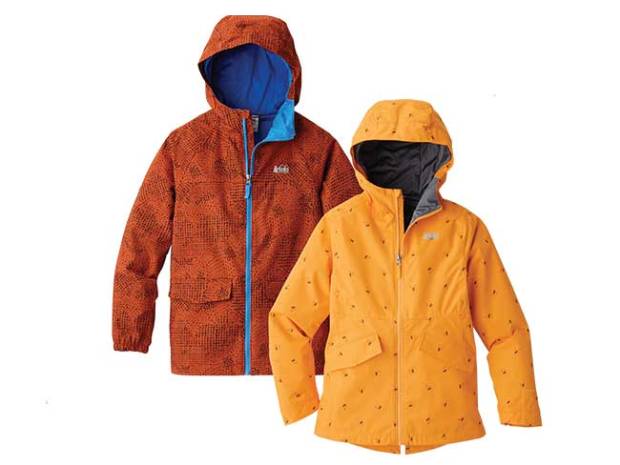
For cold, wet weather, the REI CO-OP DRIZZLER RAIN JACKET ($55, rei.com) offers good value. Waterproof and windproof (but not breathable), it has a warm fleece liner, a durable shell fabric and sealed seams to keep moisture out. The hood isn’t adjustable, but its elastic keeps it from blowing off your head. It’s not ideal for serious backcountry activities like backpacking, but it works great as an everyday foul-weather jacket.
THE HOOD
A really well-designed hood that lets you see well is something a lot of people probably don’t think about a lot, but it’s really important because with poorly designed hoods, you can barely do anything. Every time you turn your head you’re looking into the side of the hood.
Look for a hood that has good coverage, can fit over a climbing helmet (if you’ll be climbing) and is able to cinch down tight to your face so it doesn’t obstruct your view.
TAPED SEAMS
Always look for a rain jacket that’s seam-sealed. That said, keep in mind it doesn’t matter how much you spend, in a downpour even the most expensive rain jackets will probably eventually wet-out.
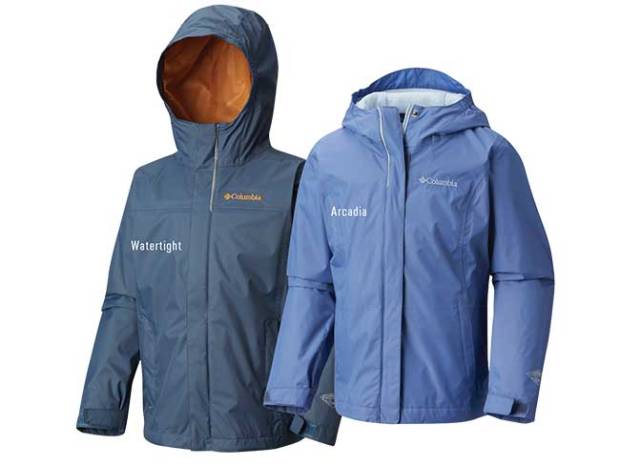
For basic weather protection, check out the COLUMBIA WATERTIGHT RAIN JACKET ($50, columbia.com) for boys and COLUMBIA ARCADIA RAIN JACKET for girls ($50, columbia.com). Breathability is minimal, but these jackets are fully seam-sealed and have an adjustable hood that performs just fine on easy hikes and other outings where you might encounter rain. Plus, they ball up compactly to disappear inside a pack when the sun shines.
PIT ZIPS
Even though they may claim breathability, the truth is that any rain jacket is going to be a little clammy. So look for one with pit zips (zippers that open the sides of the jacket under your arms) because they help with breathability, especially when you’re being active.
BELLS AND WHISTLES
MP3 pockets, hydration bladders, etc. You’ll see tricked-out jackets in the stores with these things, but it’s best to keep it simple. The ideal jacket is really lightweight and just has a well-designed hood, two chest pockets and fully sealed seams.
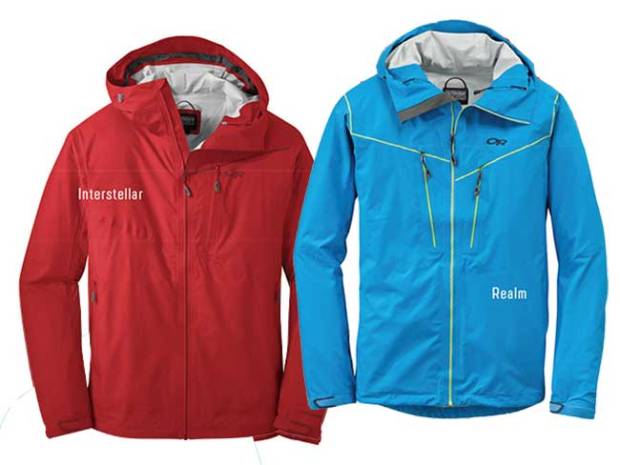
If you wear adult sizes and expect serious weather, the OUTDOOR RESEARCH INTERSTELLAR JACKET ($299, outdoorresearch.com) has you covered for almost any backcountry adventure in any season. It’s lightweight, and it delivers absolute waterproof protection and top-shelf features like a full-coverage, helmet-compatible adjustable hood, and a fit that allows complete freedom of motion. But it stands out most for the exceptional breathability of OR’s proprietary AscentShell waterproof-breathable fabric. Tip: You might still find the Interstellar’s predecessor — the REALM JACKET, also made with AscentShell — for discounted prices at online retailers.
TRY BEFORE YOU BUY
You can find good rain jackets online, but it’s always best to buy in person because you can try it on.
COST
In general, the more you spend on a jacket, the more bells and whistles you’ll get. Also, higher-end waterproof rain jackets tend to be more breathable.
If you happen to fit into kids’ sizes rather than adult jackets, you can save lots of cash on a rain jacket while still getting the same waterproof/windproof performance.
Wonderful article and love how you broke down the different types and prices. Love the pictures of them in real time and to see members of Pack 647 in the ad!
Or you can use a large plastic trash bag. Just cut holes for your head and arms!
Buy Frog Togs. Cost less than all the name brands in your article. They are waterproof and breathable. And for the cost of just a jacket you get pants too! Very cost effective.
I love my Arcteryx Alpha AR jacket and Marmot Randonnee pants peace
I have a north face hyvent and it’s awesome. I also have columbia titanium shell pants, and both are great
i got a north face hyvent on sale for $40 and it works great, some say its second best on the market after gore- tex
cool
cool story bro
I found a hard shell jacket on sale at Sam’s a couple of years ago, and it is perfect. It is lightwieght and totally waterproof, yet packs small and is roomy enough to put on over layers. It goes in my bag for every outdoor activity all year.
I have a military surplus jacket and it works pretty well.
Same here. My whole troop uses army surplus everything. We each have our own army (half) tent. It is awesome to use surplus. It is low priced, functional, and high quality
Best jacket I have ever owned is the Columbia Titanium skiing outerwear jacket. It is waterproof, and has pockets on the side that can open to let in air. It also has arm pockets for my keys.
Go Columbia! Omni-Shield is the best
cool
I have a waterproof bratheable softshell. It’s Columbia brand, and is really nice!
I went to philmont last year and obviously before going i bought rain gear because without it, the trip wouldve been miserable. The brand i got was called frog toggs, and they are amazing. they are breathable, 100% waterproof, compactable, they dry quickly, extremely light weight, and really really good priced. they also blocked the wind. they are a backpackers dream. lol. if u plan on going on a backpacking trip, i suggest you check them out
The odd thing is, when I go to war with the others in my troop, I wear the cheap stuff. The cheap is actually pretty good.
(we do war games on every outing)
I have a pac tech one and it works fine. It’s getting too small though.
You can find good rain gear for usually pretty decent prices. I got lucky with my gear. I found a Gore-Tex Paclite shell for $40 at Sportsman’s Warehouse!! Gore-Tex usually costs about $100-$180, but I found a great price. But for day hikes, I just bring a light poncho or something like that. Even a big trash bag can do the job, but it’s not recommended.
I have a Cherokee light weight 100% waterproof jacket
i have a nike waterproof shell. IT WORKS!!!!!!!
i like the green
the blue jackit is cool
How good is Goretex?
I use Gore-Tex shell & pants. 100% waterproof, 100% windproof, perfect for an all-day soaker. Gore-Text is typically heavier than Polypropylene, but not by much. Expensive, but worth it.
I actually found the info very useful. I like the red one best anyway.
I like the red one
Spyder jackets are the warmest best jackest I’ve ever worn! Pretty expensive at $299.99
I have a pair of REI rain pants and a Columbia titanium rain shell and they are the best I’ve ever had!!! I live in Hawaii so they get LOTS of use, espesially this last winter when Haleiwa town was flooded and people could kayak in the street!!!
what brand would you recomend? for hardshell.
that is the best jacket i have ever seen
im not much of winter camping person but i think with this information about wat type of “shells” is best suited 4 is awesome!!!
this was very helpful in picking out a spring and summer jacket for camp
What company makes that blue jacket?
works the best
I love these jackets
Best jacket
too bad i dont have one
These Jakets are awsome for camping.
Cool jacket
My dad just got one of those blue jackets, and it’s amazing.
I have one similair to that one, they work very well.
bast jacket ever!!!