
Expert Buying Tips to Help You Pick the Best Backpack
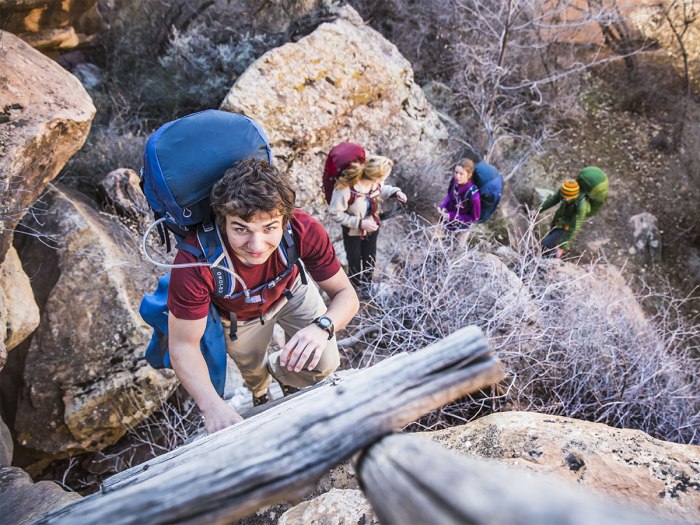
Backpacking lets you explore places in the wilderness that most people never see. Other than boots, no piece of gear will affect how much you enjoy a backpacking trip as much as your pack.
Here is the Gear Guy’s guide to picking the perfect pack.
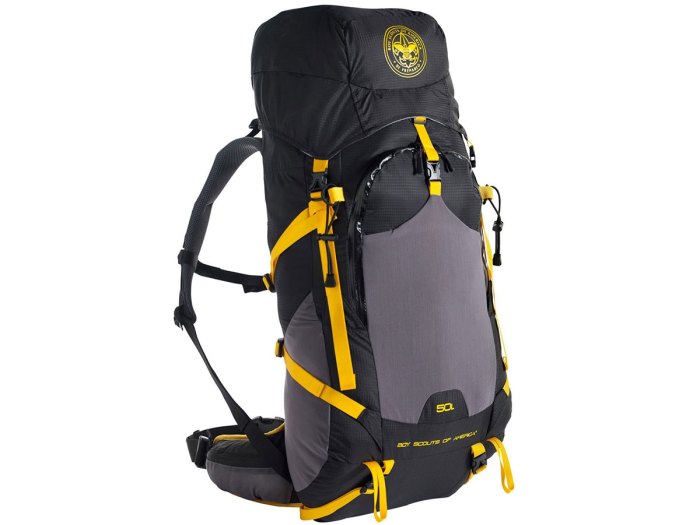
BSA Ultralight 50 L ($100, scoutshop.org): Functional and affordable, this top-loading backpack has features seen in pricier packs, starting with shoulder hip belt and back padding, and an aluminum frame. The pack’s 50-liter capacity can handle multiday trips. Side compression straps stabilize partial loads, and stretch material in the pockets swallow items like water bottles, snacks and rain gear. The pack’s fabric also mirrors what’s used in more expensive packs, offering good durability. Bonus: Its unisex design adjusts to a wide range of torso sizes. Fits torsos 15-21 inches, 3 lbs. 6 oz.
HOW BIG SHOULD YOUR BACKPACK BE?
Backpacks with 40-50 liters of capacity are generally made for carrying some personal gear — sleeping bag, pad, clothes, some personal items and snacks — but not a full share of team gear.
If you’re planning an ultralight backpacking trek for a few days, look at backpacks that hold 50-65 liters of gear and weigh no more than 2.5 pounds when empty.
A 65-liter backpack is a good all-around size for weeklong trips. Some are fairly lightweight yet comfortable, carrying up to 40 pounds, sometimes more.
For gear-intensive multiday trips, look at 70-liter backpacks or bigger, with a supportive suspension system and more features.
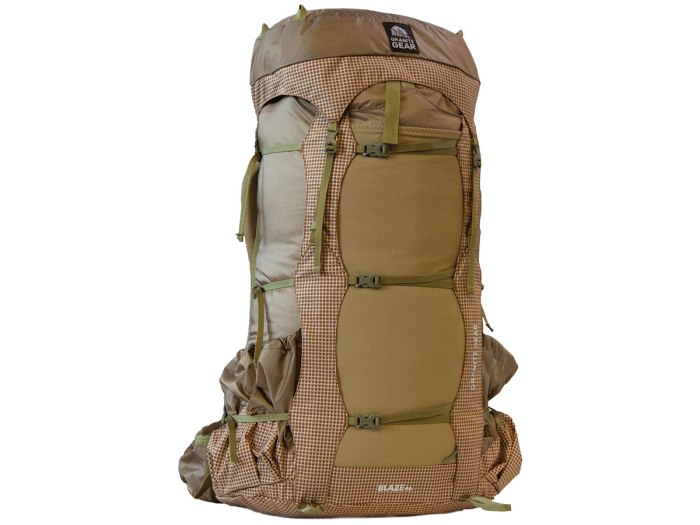
Granite Gear Blaze 60 ($270, granitegear.com): This pack hauls 50 pounds comfortably, thanks to a lightweight framesheet and foam padding on the shoulder harness and hip belt, both of which are adjustable and calibrated to specific torso length and waist size measurements. The six external pockets include two spacious zippered ones on the hip belt and a deep stretch-woven front pocket. The removable floating lid converts to a chest pack that carries clipped to the pack’s shoulder harness. With its low weight, carrying capacity, features and superior compression, the Blaze 60 ranks among the most versatile backpacks on the market. Fits torsos 15-24 inches, 3 lbs. 2 oz.
GET THE RIGHT FIT
If you’re still growing, stick to adjustable-suspension packs that can adapt to your body through the years. Fixed-suspension bags are another option, and they are usually sold in more than one size — meaning you buy a new one when you grow out of it.
Whether the pack has an adjustable or fixed suspension, fitting it correctly is critical to comfort, and that requires knowing your torso length. Here’s how to measure it:
Stand straight and place your hands on the shelf-like top of your hipbones; your thumbs will point to a spot on your lower spine. Ask someone to extend a soft tape measure (or a string to hold against a stiff measuring tape afterward) from your thumbs to the bone protruding from the base of your neck when you tilt your head forward. That’s your torso length.
A pack fits better when your torso length falls within the pack’s fit range. Try on the pack to make sure it’s comfortable. If it isn’t, it’s not worth your money.
Expert tip: If all this measuring and pack-fitting sounds like too much, head to your local outdoors store. There you can ask an expert, who will help you find a pack that fits best.
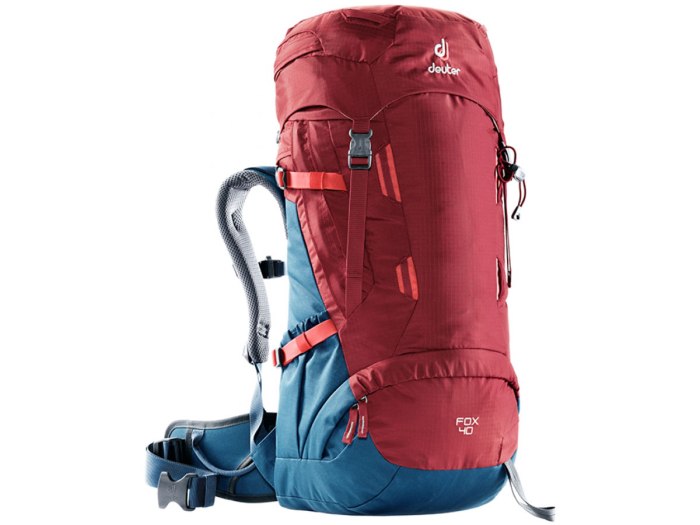
Deuter Fox 40 ($120, deuter.com): From a brand known for its tough and well-built adult packs, Deuter Fox 40 is an adjustable pack sized for young people. At 40 liters, it has enough capacity for your personal gear, and its suspension transfers pack weight onto the hips, as a good pack should. It has two external pockets, and you can hang your gear off multiple attachment points. It’s also made with durable ripstop fabric. Fits torsos 11-18 inches, 2 lbs. 14 oz.
PICK YOUR FLAVOR
Backpacks come in a variety of designs, differing in shape, how you open them (top-loading, one-zip panel access, roll-top), pockets and tons of other features. Find one that meets your needs and backpacking style.
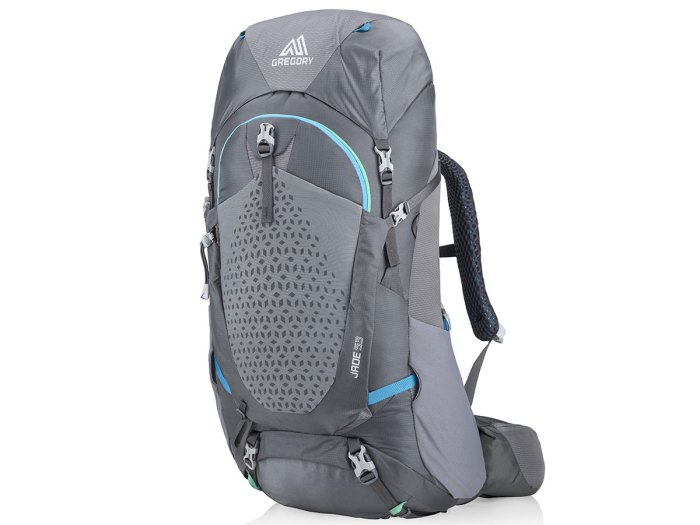
Gregory Zulu 55/Jade 53 ($200, gregorypacks.com): For those who are serious about backpacking and ready to step into adult-sized packs, the men’s Zulu and women’s Jade find a sweet spot in fit, performance and features. Gregory’s suspension system features flex panels that let the hip belt pivot and flex as a person walks to prevent hot spots. At barely more than 3.5 pounds, this pack is built to haul up to 40 pounds comfortably, thanks to an open-air ventilated back panel and the adjustable torso length. Nice touches: the U-shaped zipper opening up the main compartment, and integrated rain cover and the large hip belt pockets. Fits torsos 14-19 inches, 3 lbs. 6.5 oz.
BACKPACK PRICES
Higher prices usually mean greater comfort, more durable materials and construction, and sometimes cutting-edge technology. But any pack will get you into the backcountry.
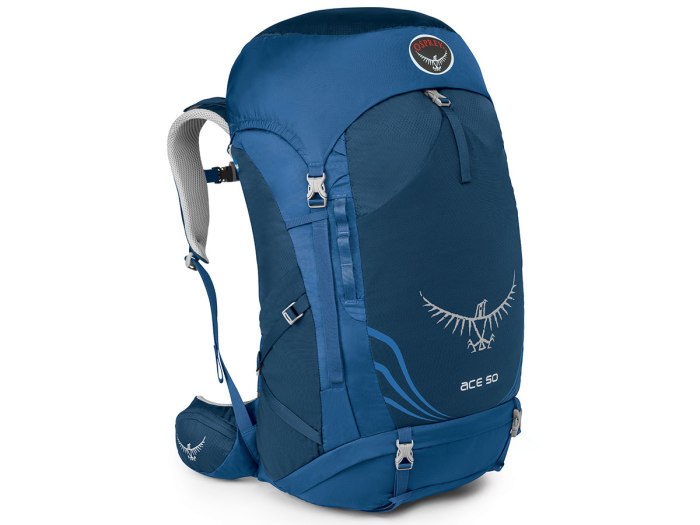
Osprey Ace 50 ($160, scoutshop.org): The top-loading Ace series packs, including the Ace 38 ($140) and Ace 75 ($180), strike a balance between moderate price and the qualities of higher-end backpacks. The Ace 50’s adjustable harness covers a 5-inch range of torso lengths, while the Ace 38 fits torsos down to 11 inches and the Ace 70 reaches up to 19 inches. The LightWire frame and plastic framesheet handle loads of 25-30 pounds or more. Large stretch-mesh front and side pockets and zippered hip belt pockets (on the 50L and 70L) offer abundant external organization, and an integrated rain cover comes in handy. Fits torsos 13-18 inches, 3 lbs.
TRY ON THE BACKPACK
Follow the same rule for buying backpacks as you would for buying boots: Try them on first. Throw some weight in a pack and walk around. After going through all the above steps, this step will help you decide if the backpack is right.
Torso size about 17-20. But where can one find this info on a backpack?
High Sierra makes some very good packs, at very good prices.
Plus, regardless of how much you spend for a pack, it’s still going to be heavy!
For New Scouts (and Old) you can’t beat an External Frame pack. Of the multiple packs I own and use I prefer an External Frame for the ease of adjusting to different body sizes, strapping on those items that don’t quite fit in an Internal Frame pack and best of all the availability of them at Garage Sales for Thrifty shoppers.
Awesome, Great tips i will implement right away. thank you.
i would really like a backback for outings
hi I just joined scouts but I’ve done a lot of hiking and even some backpacking before and I need a good sturdy pack for backpacking anything that you would recommend for under $150? t
I’d use the katadin. I have it, and it works really well
Our troop collects used gear that scouts outgrow or replace. We loan it to new scouts to use until they learn what they like.
Hi I just crossed over and i am going on a one and a half mile hike i have evrything i need,, but not a backpack. i need a blader but that is optional. please get back to me ASAP because the hick is in a week. thanks, me.
im a new scout so what do i need
Nice
go to academe sports has some great stuff good luck man boy scouts is hard but fun. DO NOT QUIT SCOUTS WHAT EVER YOU DO!!!!!!!!
Hi! I’m looking for a really sturdy backpack. I want to start backpacking for at least three days (hopefully more!). I’m around 5’4 and I need a pack that will be able to hold my tent, sleeping bag/pad and cooking gear and the rest of my supplies. IS THERE A REALLY DURABLE PACK OUT THERE FOR LESS THAN $200?
You can get what you need for like 80 bucks good luck on you hike
I have a super durable pack mine was about $310 but is the best pack that youy could ever want. Aether AG70 i have back packed with this pack for 3 years and have taken it on 10 day trips. would really suggest it.
I’m 4,7 ish what is a good pack
I’m about 5 ft2 and need a knew pack to start Boy Scouts. I’m about 95-100 pounds and I would prefer an internal framed pack. I live in New Hampshire, and there is rugged terrain and snow. Does anyone have a suggestion for a pack that’s under 180 that can stand these conditions and hold lots of gear?
Using terms like “smaller guys and “larger guys” in your articled is not very helpful. How small is “smaller” and how large is “larger”? Since scouts’ sizes can range between a small 7 year-old and 6-foot tall teen I have no idea where my tall 10 year-old’s size falls along your two-category spectrum.
Matt — Torso size, as described in the article, is the most important measure. If you measure your son, it will give you an idea which packs listed in the article would fit him. I think the term “smaller guys” you are referring to is in the description of the REI packs; I’ve looked at those packs for my son as well, and if you look at the torso length specs at REI, you’ll see what they mean. The Passage 38 would probably fit most boys down through Cub Scout ages, while most boys 11 -18 would fit the 65.
I need a backpack for a 4′ 5” person, any suggestions?
Use a teton!!!!
I would recommend the Gregory Wander! I’m exactly 4,5 and it’s fits me very well. They also come in a 70L model for $199
I was looking at an osprey under at 190$, but then I found the Back Diamond epic 45 at 123$, small, i am 5 foot 6 and am looking for a pack to last 3 to even a week hiking. Very rugged terrain. Any suggestions?
I have an osprey kestrel 48 that works great and I’ve held gear for 8 days in it and I’m gonna use it at philmont
i would go with a kelty red cloud
if your a smaller frame you can even go with womens sizes.
but kelty or gregory are the best in my opinion.
osprey are so expensive and i feel they dont hold up!
don’t forget about frameless packs they are a little bit hard to pack though because you have to do it precisely
Frameless packs are not really made anymore.
yes they are that’s basically what most ultralight packs are.
I bought a really good quality backpack at a thrift store for $20. It was really lightly used. Just shop at a thrift store and save a TON of money.
I’m looking for a good pack for a younger scout that would fit for someone five foot three and is very light. I’m looking for something under $150
Ozark trail explorer 45l $59
yah but I’ve never found something like a backpack even in mildly good condition.
I prefer using day packs without a any frame in them at all for multi day backpacking trips . I like the way it feels on my back and shoulders